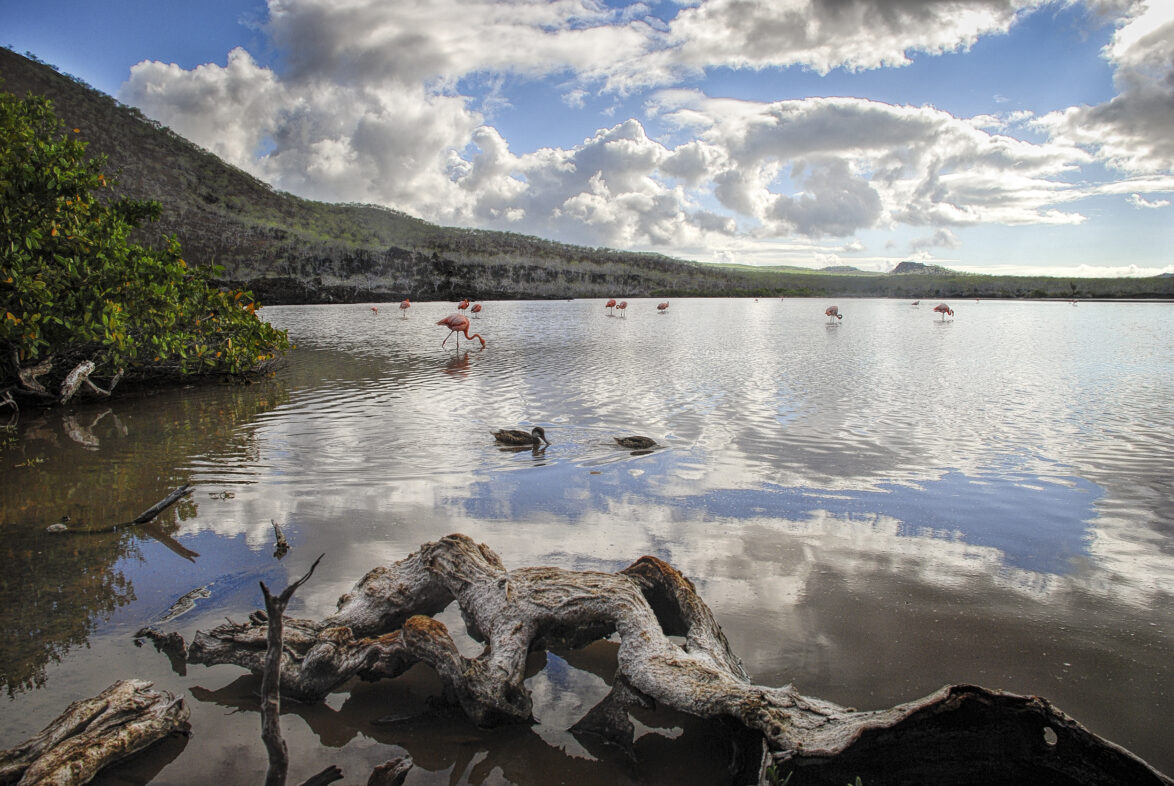
American flamingo
The American flamingo is well known for having vibrant pink feathers and a flexible neck. Galapagos is home to a small population of a few hundred flamingos.
Find out more
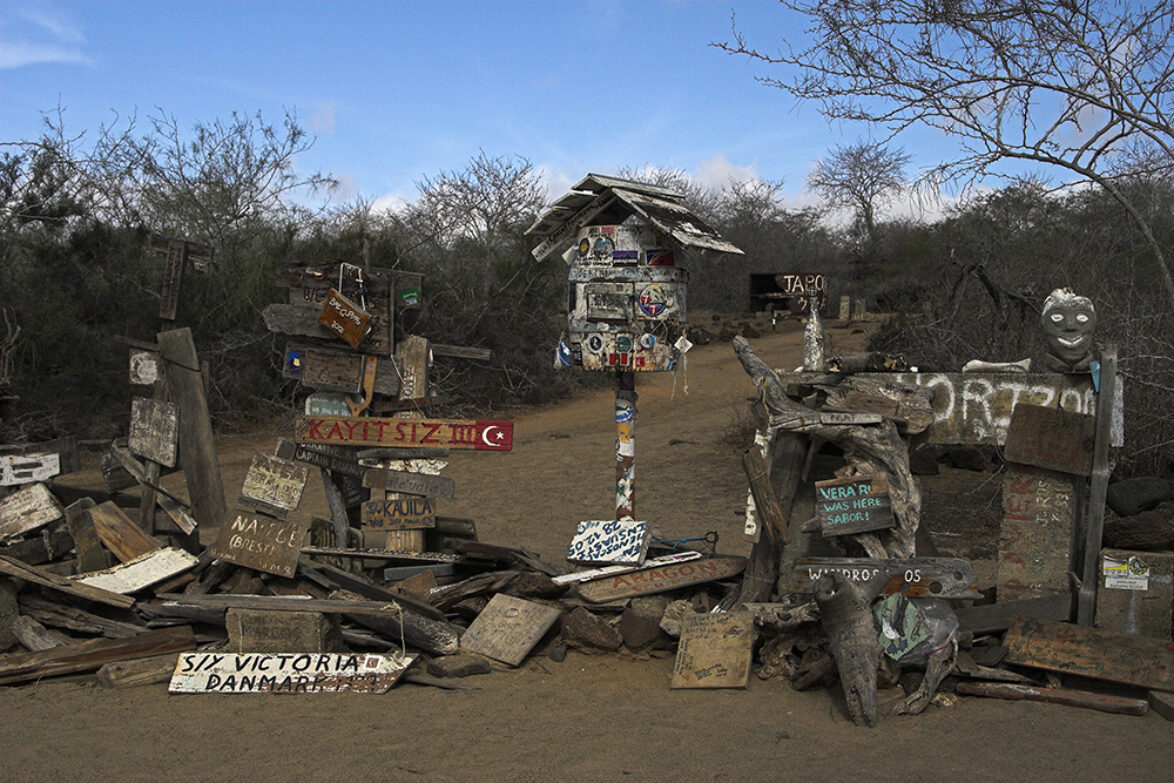
Floreana has arguably the most interesting human history of all of the Galapagos Islands. It is the site of the first Galapagos ‘post office’, established in 1793 by whalers. It consisted of a wooden barrel that served as a post box, so that mail could be picked up by passers–by and delivered to its destination in Europe and North America.
Floreana was home to the first Galapagos resident – a bold Irishman named Patrick Watkins who was stranded in 1803 and then settled to sell supplies to whalers until 1809. Later residents included convicts, pirates and colonists.
The island is also the setting for the unusual and strange turn of events in the 1930s known as the ‘Galapagos Affair’ involving a scandal and the mysterious deaths of three of the first permanent residents of the island.
Floreana is now home to approximately 160 people, who mostly make their living from farming or small-scale tourism. The Wittmer family, descendants of some of the first settlers of Galapagos, have a small hotel, restaurant, gift shop and post office in Puerto Velasco Ibarra. For many years this was the only tourist accommodation in Floreana and had the only telephone on the entire island. Puerto Velasco Ibarra is a small community with a church, school, medical clinic and a few shops and restaurants. The main water source for Floreana is a natural pond that fills up with rainwater during the rainy season; during droughts, water problems can become quite serious for the population. Transport to and from Floreana remains limited compared with the larger islands, though regular boat services connect the island with Santa Cruz several times each week.
Floreana is home to the endemic, Critically Endangered medium tree finch and one of the only endemic snails on the Islands. The Galapagos petrel is also found on Floreana, a seabird which spends most of its life away from land. There are nesting sites of pelicans, herons and red-billed tropicbirds, and pink flamingos nest here between December and May. Whitetip reef sharks and stingrays are commonly seen in the waters surrounding the island, green sea turtles nest on the beaches between December and May, and Pacific green sea turtles nest from December to March.


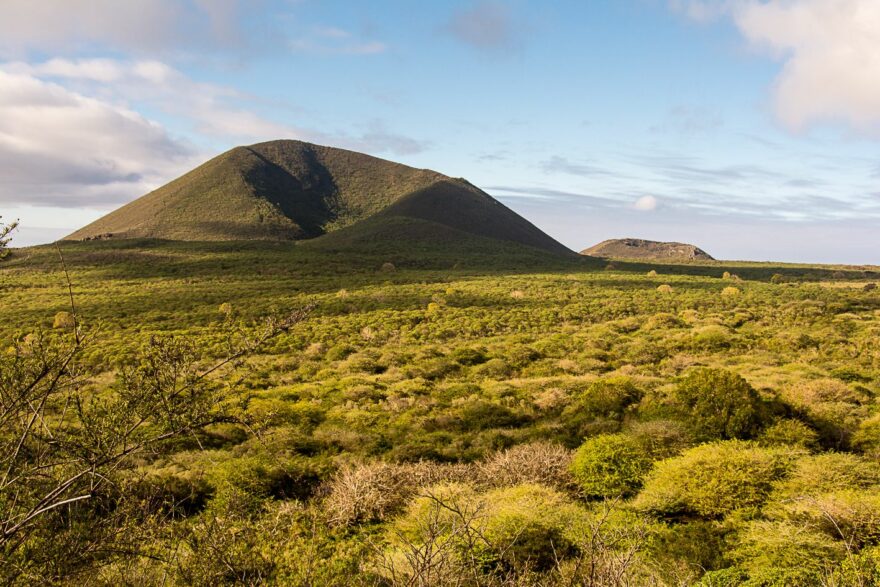
Of all the Galapagos Islands, Floreana is the one most altered by the presence of humans and invasive feral goats. The goats and some other invasive herbivores were completely removed by the Galapagos National Park in 2007, but a devastated landscape no longer fit to sustain Floreana’s native wildlife was left in their wake.
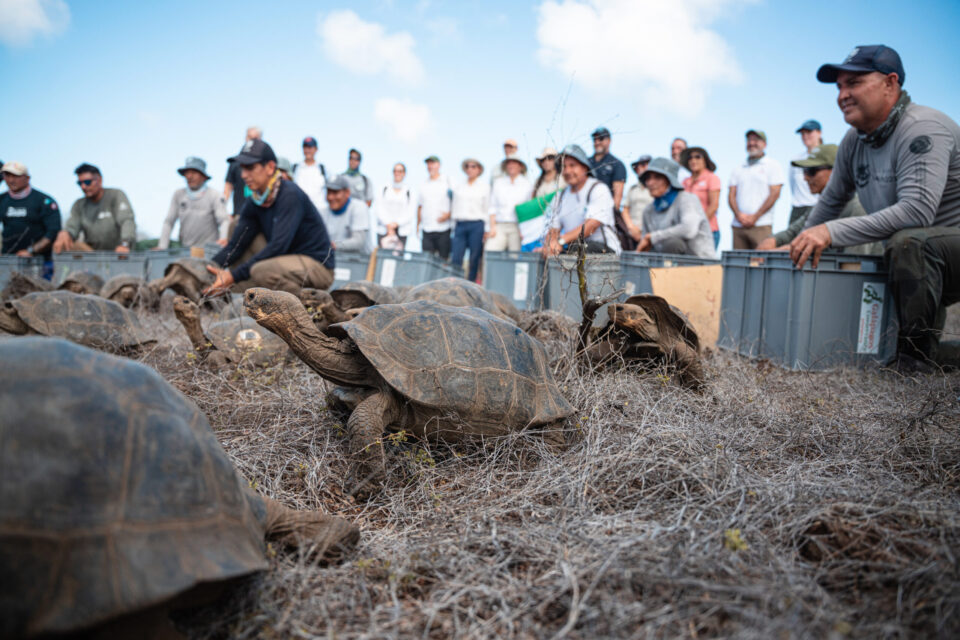
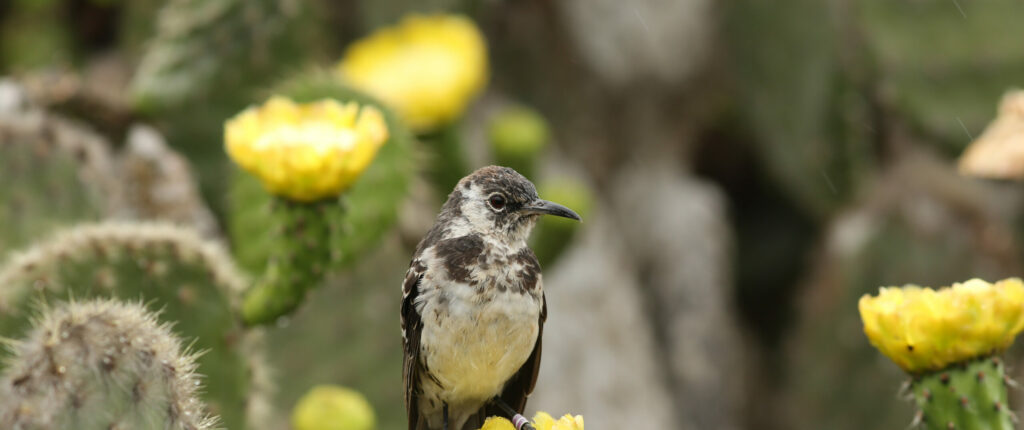
Conservation work is now focused on restoring healthy populations of Floreana giant tortoises, Galapagos racers, hawks, barn owls, rails, four species of finch, and, most notably, the Floreana mockingbird. Extinct on the main island, the Floreana mockingbird can now only be found in two small populations located on two tiny islets off the coast of Floreana.
"Floreana is the sixth largest island in Galapagos, and used to be home to some of the most iconic species in the Archipelago."
We are supporting our partners to undertake one of the most complex restoration projects ever conducted on an inhabited tropical island, with the ultimate aim of reintroducing locally extinct species.