Giant tortoises return to Floreana
158 giant tortoises have been reintroduced to Floreana, a huge milestone in the restoration of the island, following decades of preparation supported by GCT and many others.
The restoration of Floreana has reached a hugely significant milestone, with 158 captive-bred giant tortoises released into the wild this week, more than 150 years after these gentle giants disappeared from the island. This long-anticipated moment gives hope, not just for the future of Floreana, but for the future restoration of islands around the world.
Large herbivores such as giant tortoises often play an outsized role in restoring degraded ecosystems when they are reintroduced. They are ‘ecosystem engineers’, shaping their environment by breaking up dense vegetation, wallowing in muddy ponds and dispersing seeds, creating opportunities for new plants to grow. As the tortoises help to return the ecosystem to a more natural state, we see knock-on benefits for other species such as birds and iguanas. This is the essence of what we mean by ‘rewilding’ in Galapagos.
Floreana’s native tortoise species, Chelonoidis niger niger, is considered to be Extinct, thought to have disappeared in the 1840s or 1850s due to overexploitation as a food source by sailors and settlers, along with the introduction of invasive species such as goats, pigs, dogs, cats, donkeys and rodents. These introduced animals have been devastating for many Galapagos species, preying on eggs and hatchlings, and destroying habitat.
The return of the Floreana giant tortoise
The remarkable story of the Floreana giant tortoise, a species that the world thought was lost forever.
However, there was a remarkable twist in the tale of the Floreana giant tortoise. In 2008, hybrid tortoises with high levels of Floreana ancestry were discovered on Wolf volcano on Isabela island, where sailors are believed to have released Floreana tortoises during the 19th century. This discovery created an opportunity to repopulate Floreana with tortoises that are genetically similar to the extinct species, and a captive breeding programme on Santa Cruz has produced more than 600 tortoises ready for reintroduction.
The Floreana tortoise is one of 12 missing species set to be reintroduced to the island. This first release is part of a carefully staged, science-driven plan extending through to at least 2030, with each species introduction guided by rigorous habitat studies, adaptive management and community participation. The Floreana Ecological Restoration Project is led by the Galapagos National Park Directorate along with the Biosecurity and Quarantine Agency for Galapagos. It is co‑executed by Fundación Jocotoco, the Charles Darwin Foundation and Island Conservation, with the support of several partner organisations, including Galapagos Conservancy, which is leading on the tortoise release, Durrell Wildlife Conservation Trust, and Galapagos Conservation Trust (GCT), which has been supporting the project for 20 years.
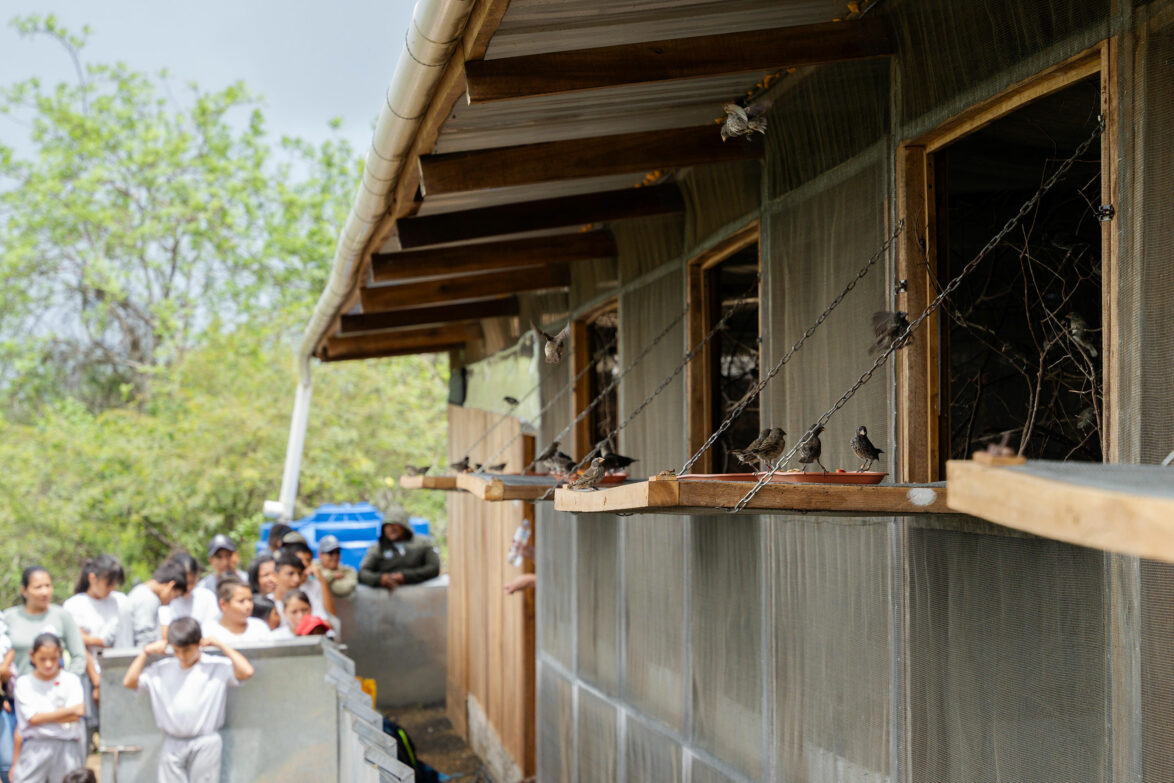
GCT’s role to date has included supporting the collection of baseline data on food sources and disease prevalence; ensuring availability of aviaries for translocated birds; community education and engagement; investing in early career scientists, field workers and rangers; and helping to fund the replanting of native vegetation ready for the return of the Floreana mockingbird.
Adopt a giant tortoise
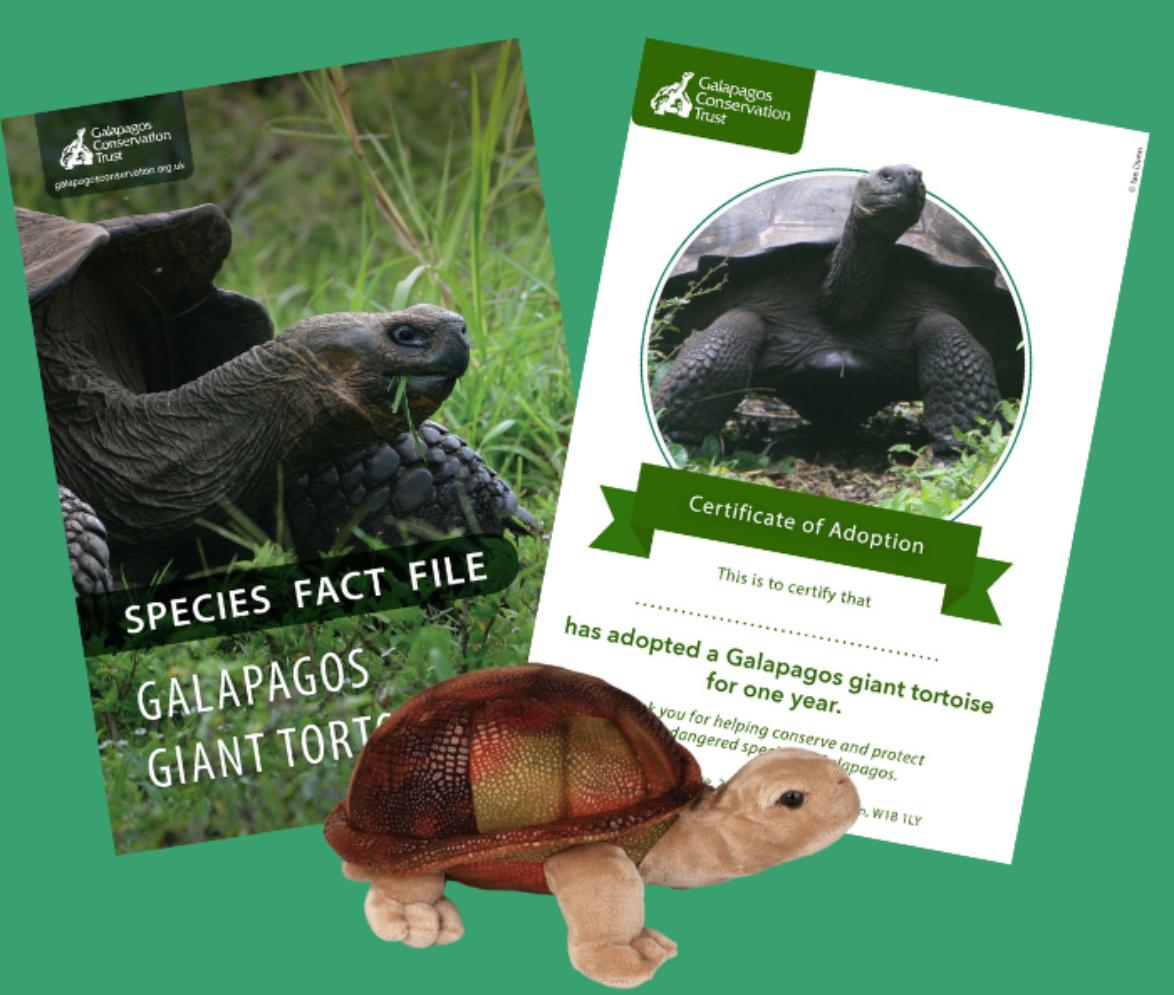
Our wildlife adoption packs include a fact file and a personalised certificate printed on 100% recycled paper, plus an adorable soft toy. All proceeds help fund vital conservation work in Galapagos.
“Seeing giant tortoises back on Floreana is a truly spine-tingling moment,” commented Dr Jen Jones, GCT’s chief executive. “It’s a validation of the incredible efforts we’ve seen over the last 20 years from a whole ecosystem of conservation NGOs, local authorities, determined individual researchers and community champions, and GCT is proud to have been part of this collective effort since the very start.”
The reintroduction of giant tortoises to Floreana has been made possible by the invasive species eradication carried out in late 2023, which eliminated most of the rats and feral cats on the island. There have already been dramatic results, including native bird species such as the small ground finch rebounding, the unexpected rediscovery of the Galapagos rail on Floreana after 190 years, and significant increases in the numbers of native snails, lizards, geckos, Galapagos doves and the Critically Endangered Galapagos petrel. The eradication has also been hugely beneficial for the Floreana community, with farmers reporting full harvests for the first time in years thanks to the removal of so many rats, boosting household income and local food security.
Seeing giant tortoises back on Floreana is a truly spine-tingling moment.
Related articles
The art of reintroduction
Rewilding Islands Webinar 2026