Bouncing back: Inspiring stories of nature recovery in Galapagos
A growing body of evidence shows that, by giving struggling species a helping hand, we can kickstart natural processes that lead to a rapid and remarkable recovery.
In 2025, an extraordinary discovery was made on Floreana. The Galapagos rail, a secretive bird not seen on the island since Charles Darwin’s visit in 1835, was recorded in three different locations. The discovery followed the removal of most of Floreana’s rats and feral cats in late 2023, and is a beautiful illustration of how quickly nature bounces back if we give it the chance.
Islands such as Floreana are particularly vulnerable to the threat posed by invasive species. The native wildlife has evolved over millennia, adapting to the specific environmental conditions, food sources and the threat from native predators. But when something new is suddenly introduced from elsewhere, such as rats scurrying ashore from visiting ships, or pet cats allowed to roam across the island and breed, the effects can be devastating. The Galapagos rail is a ground-nesting bird, making it easy prey. And we know of at least 11 other species that went extinct on Floreana, from tiny finches to the Floreana giant tortoise.
It’s an all-too-familiar story: humans arrive at a pristine island wilderness, and within a few generations, wildlife populations have crashed and entire species have disappeared. Conservation has traditionally been seen as a way of stemming these losses, of preventing things from getting any worse by carving out small but precious sanctuaries where species can cling on. But in recent years, we have seen a new story emerging. An altogether more ambitious approach seeks not just to conserve, but to restore nature, with remarkable results.
190
years since the Galapagos rail was last seen on Floreana
Coming home to roost
When GCT was founded in 1995, the situation on many islands was dire. Vegetation razed to the ground by goats overgrazing; tortoise and iguana nests plundered by pigs; birds picked off by feral cats; and the creeping menace of invasive plants strangling native flora. Over the last 30 years, together with our partners, we have made huge strides, and GCT has provided seven-figure sums to fund complex island eradication projects such as Floreana.
The idea of eradicating an invasive species can be difficult to stomach. Rats are living creatures too, after all, and it’s not their fault that they’ve ended up somewhere they shouldn’t be. Eradications will always be a last resort for conservationists; they are financially costly, and success is not guaranteed. But they are often the only way to undo the careless past actions of humans, which may have occurred decades or even centuries ago, and which now threaten to extinguish for good species that exist nowhere else on Earth.
After many years of preparation, the first attempt at the eradication of invasive species from Floreana took place in late 2023. Within just a few months, researchers and the local community on Floreana reported astonishing signs of recovery. Galapagos doves, a species that had become rare on the island, started to return and pair up. Farmers who had endured their crops being ravaged by rats saw harvests improve dramatically. And when the Galapagos rail was spotted on Floreana, it appeared to be an echo of what happened on Pinzon, an island that rails and cactus finches had naturally recolonised following a rodent eradication in 2012.
Join GCT today
Big challenges call for bold solutions. Become a member of GCT and help us turbocharge nature recovery in Galapagos.
Hiding in plain sight?
Dr Birgit Fessl, Principal Investigator for landbird conservation efforts at GCT partner the Charles Darwin Foundation (CDF), described the discovery of the Galapagos rail on Floreana as a “beautiful surprise”. It was a team of CDF scientists and Galapagos National Park rangers that confirmed the presence of the birds, following suspected sightings by Wilson Cabrera, a local island restoration specialist with Fundación Jocotoco.
“There are two possible explanations,” said Fessl. “Either the Galapagos rail recolonised the island, or it was never truly extinct but remained undetected due to extremely low population numbers.”
Genetic sampling has since been carried out to determine which of those explanations is correct. This being Galapagos, there is every chance that the results will throw up more surprises once they are published. Either way, it’s not the first time that a species believed to be locally extinct has reappeared in Galapagos.
The small island of Rabida, at the centre of the Archipelago, has also suffered badly from the effects of invasive species. During the 1970s goats were twice introduced to Rabida and then eradicated, and in 2011 introduced black rats were successfully removed from the island. One of the species thought to have been driven to extinction on Rabida was the leaf-toed gecko, which was only known to have existed there from partially fossilised remains dating back some 5,000 years. But specimens collected during expeditions in 2019 and 2021 confirmed that the species had managed to hold on, and is now believed to be recovering.
“Nature is remarkable,” commented Paula Castaño of Island Conservation, which led the eradication project in partnership with the Galapagos National Park Directorate and others. “Allow it an opportunity to thrive and it comes roaring back.”
Nature is remarkable. Allow it an opportunity to thrive and it comes roaring back.
The Gardeners of Galapagos
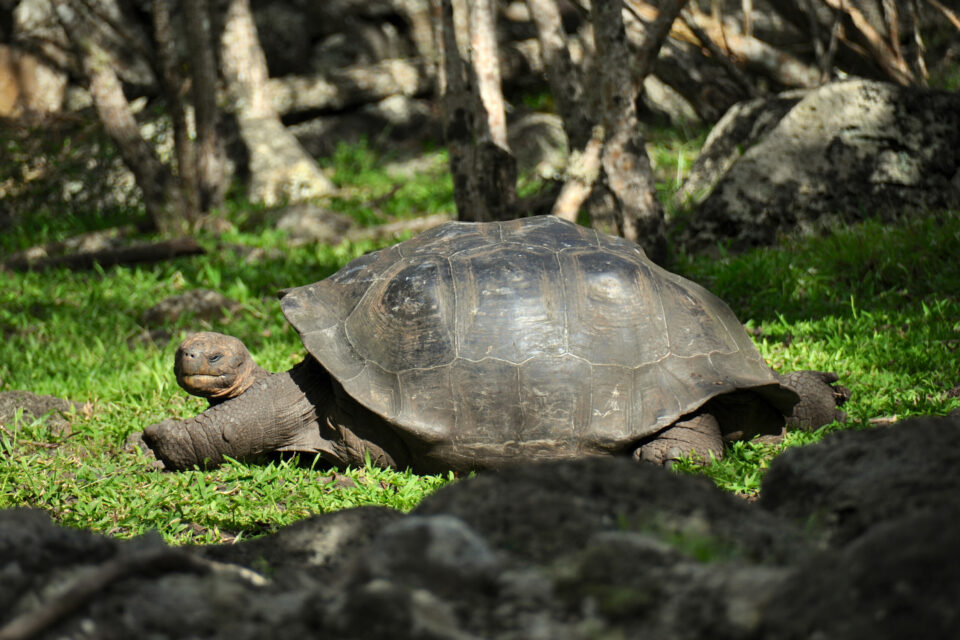
Defenceless birds and tiny geckos are not the only beneficiaries of rodent eradications. Large herbivores such as the tank-like Galapagos giant tortoise may boast formidable defences against predators when they are fully grown, but eggs and hatchlings are far more vulnerable. On Pinzon island, giant tortoises faced extinction due to their eggs being eaten by black rats, and only around 100 adult tortoises were left in the wild by the 1960s. However, following the removal of invasive rodents in 2012, Pinzon giant tortoises began to successfully hatch in the wild for the first time in over 150 years.
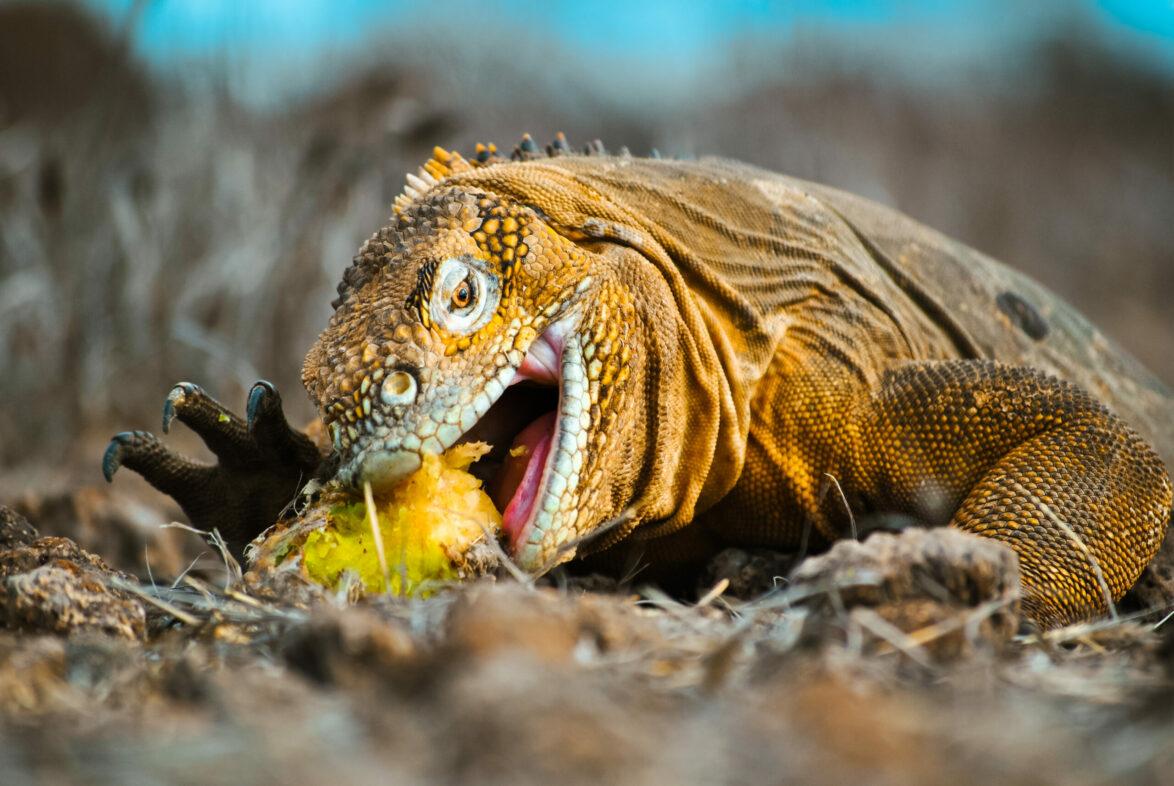
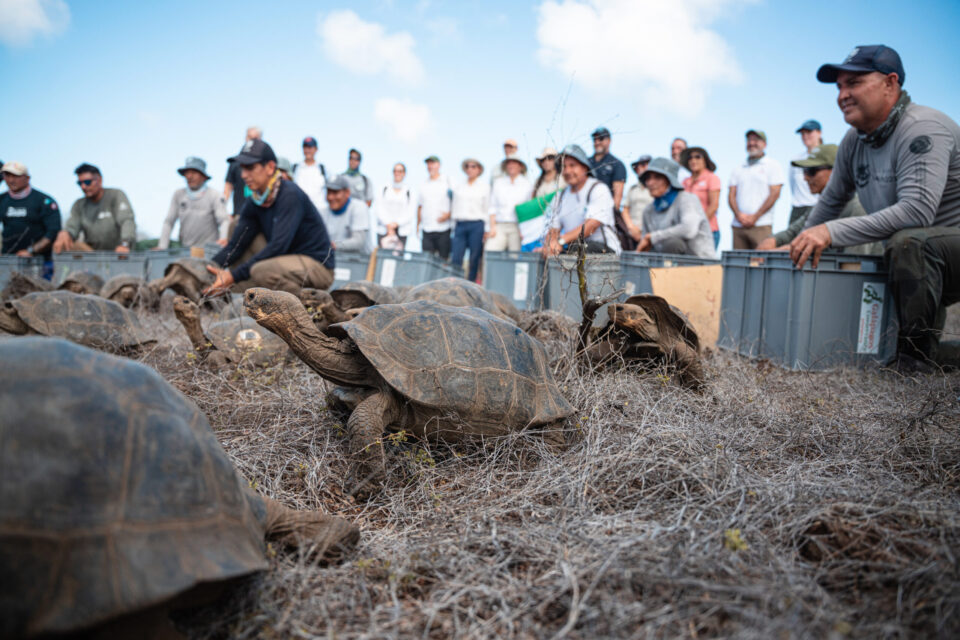
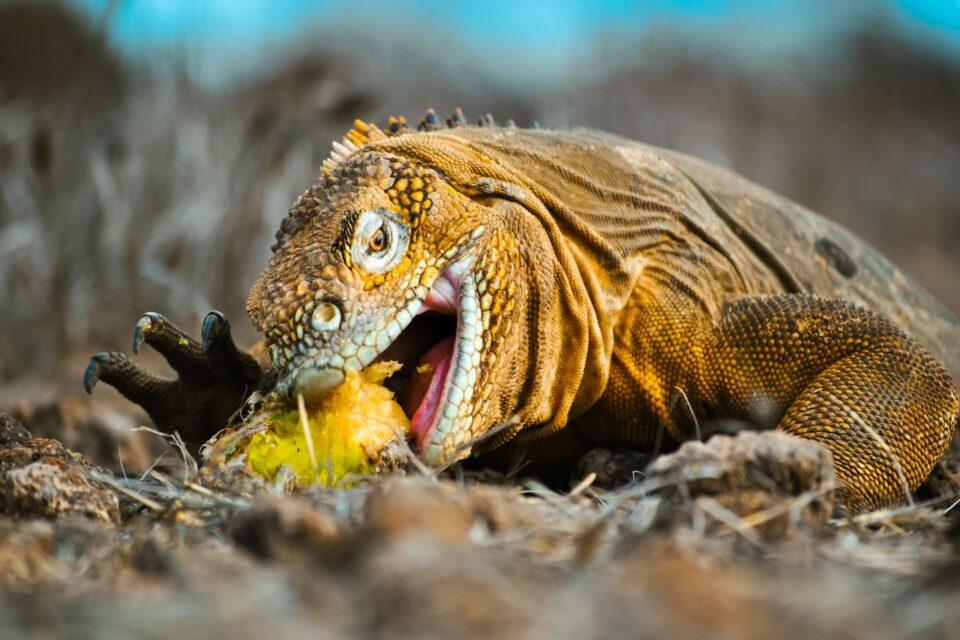
This is important for two reasons. Firstly, it provides hope for this species, and for the many others that find themselves facing similar threats. But secondly, it’s important because giant tortoises are ‘ecosystem engineers’, shaping their environment by breaking up dense vegetation, wallowing in muddy ponds and dispersing seeds, creating opportunities for new plants to grow. By restoring and increasing giant tortoise populations, we then see cascading benefits for other wildlife. On Española island, the recovering giant tortoise population helps to keep the ‘landing strips’ used by waved albatrosses clear of vegetation. We see similar relationships on islands where Galapagos land iguanas are present, such as on South Plaza, where the iguanas keep woody vegetation in check and create space for sea lions to bask.
These stories of hope serve to illustrate the outsized benefits of island restoration. By giving nature a helping hand, we can kickstart recovery and regeneration, bringing endangered species back from the brink of extinction. We can repair the Earth’s life support systems, and unlock nature’s capacity to heal itself. But there’s no time to lose.
The power of ecosystem engineers
Rewilding in Galapagos can repair degraded habitats, thanks to the amazing powers of ‘ecosystem engineers’ such as giant tortoises and land iguanas.
Related articles
Giant tortoises return to Floreana
Darwin and the land iguanas of Santiago