Darwin and the land iguanas of Santiago
Charles Darwin was one of the last people to describe land iguanas living on Santiago and was not exactly polite about these reptiles. But it wasn’t long until Darwin's inquisitive nature took hold...
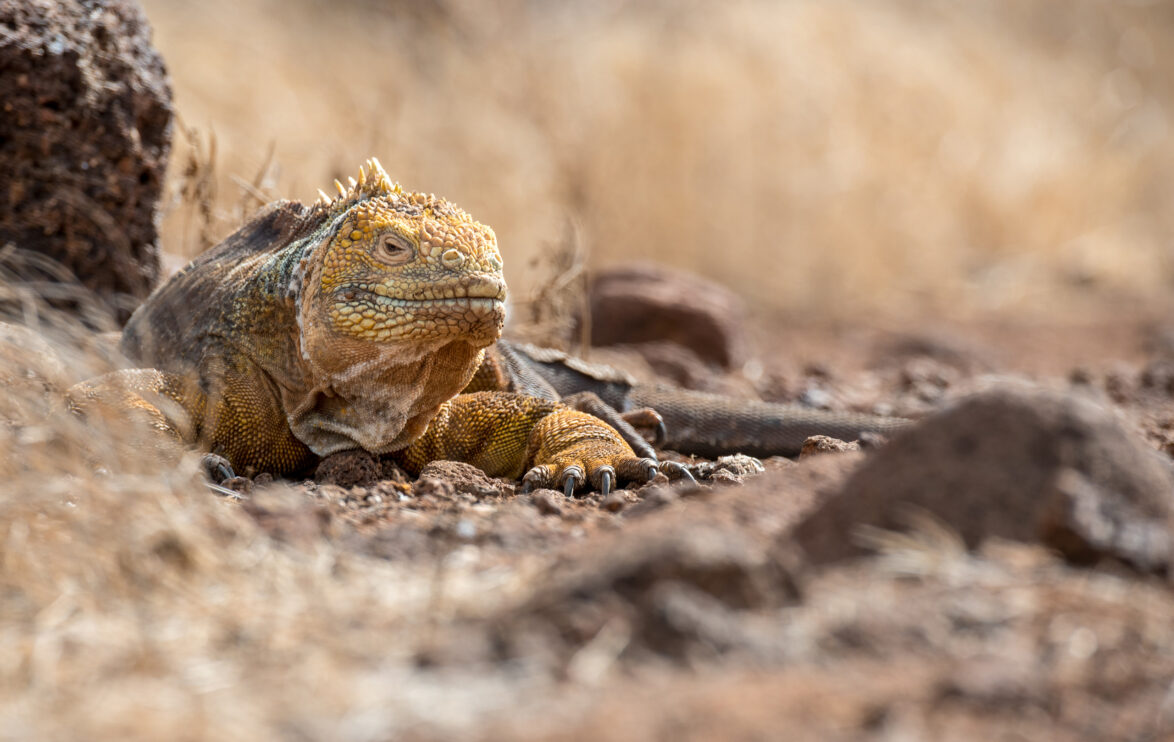
When Charles Darwin met the land iguanas living on Santiago, he wasn’t very impressed. “From their low facial angle they have a singularly stupid appearance,” he wrote. “In their movements, they are lazy and half torpid.” There were so many of them nesting on the lower slopes of Santiago that Darwin and his Beagle shipmates “could not for some time find a spot free from their burrows” on which to pitch a tent. But once settled, Darwin turned his inquisitive mind to finding out everything he could about their biology. He cut open a few specimens, finding their stomachs “full of vegetable fibres and leaves of different trees” and, observing that they were “very fond of cactus”, he began to feed them with slices of Optuntia. “When a piece is thrown towards them, each will try to seize & carry it away as dogs do with a bone,” he wrote.
In their movements they are lazy and half torpid.
Santiago’s land iguanas, like almost every other animal in Galapagos, did not appear to be fearful. In a confrontation, either with another iguana or Darwin himself, they would curl their tails, raise themselves on their forelimbs, and bob their heads up and down quickly, which “gives them rather a fierce aspect.” When Darwin poked one with a stick, he found it would “bite it severely” and that two animals “placed on the ground close together” would fight “till blood is drawn.” When the Beagle left the Galapagos a few weeks later, it sailed away with one land iguana specimen pickled in “Spirits of Wine”.
Darwin in Galapagos
Discover more about Darwin’s historic visit to the Galapagos Islands.
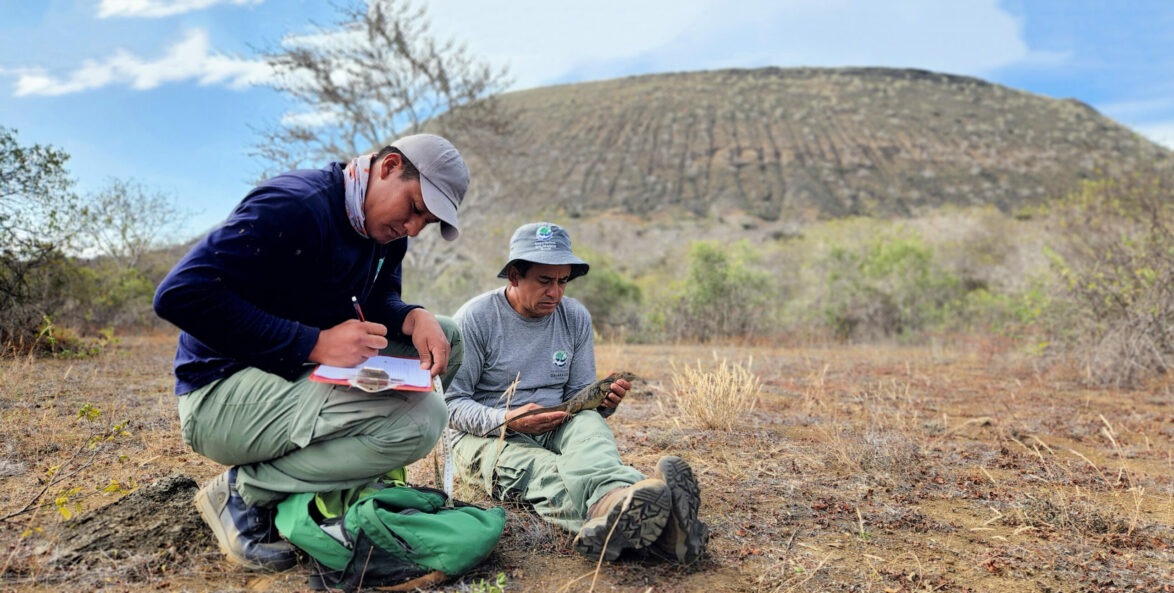
This account and a few others made by naturalists before and just after Darwin are the only records we have of land iguanas living on Santiago. Over the next few decades, pressures exerted by increasing human footfall – including further disruption of nesting grounds, the harvesting of iguanas and their eggs for food and the introduction of pigs and goats to Santiago –led to the extinction of the island’s land iguanas. Yet today, in 2026, more than 150 years after their disappearance from this island, the land iguanas are making a comeback.
Reintroducing land iguanas to Santiago
Discover the groundbreaking work to return of the Galapagos land iguana to Santiago.
Related articles
Giant tortoises return to Floreana
Bouncing back: Inspiring stories of nature recovery in Galapagos