Skip navigation
Go to home page > Our Work > Projects > Safer seas for wildlife

Safer seas for wildlife

Sharks and rays in Galapagos
© Chloe King
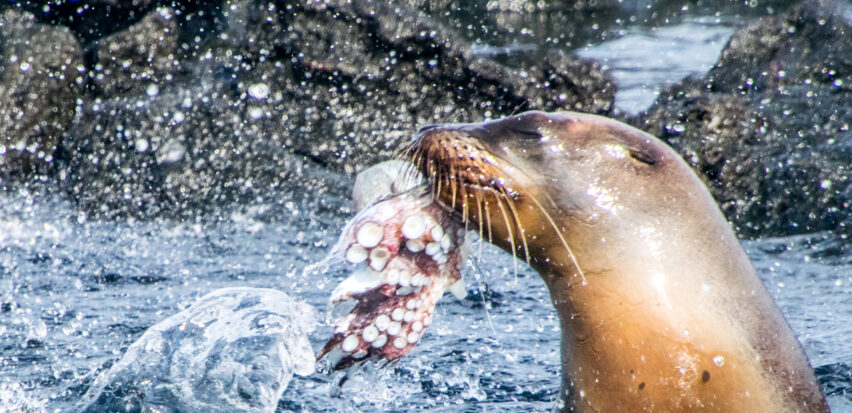
Galapagos sea lion catching an octopus
© Jose Guerrero Vela

Overview

The Galapagos Marine Reserve covers an area of 198,000 km² following the addition of the new Hermandad Marine Reserve in 2022, and is home to a host of iconic marine species, including scalloped hammerhead sharks, Galapagos sea lions and waved albatrosses. But these creatures are threatened by huge industrial fishing fleets once they leave the safety of the Reserve, as well as destructive fishing methods that encroach on the protected areas themselves. We are working with our partners and local authorities to ensure that ocean protection in Galapagos is data-driven and effectively enforced, prioritising high-risk areas such as shark nursery sites and migratory routes. We are also helping to build the evidence required for expanded ocean protection, including on the High Seas.

Project Partners

Galapagos National Park MigraMar CSIRO Universidad San Francisco de Quito Fundación Jocotoco Conservation International - Ecuador
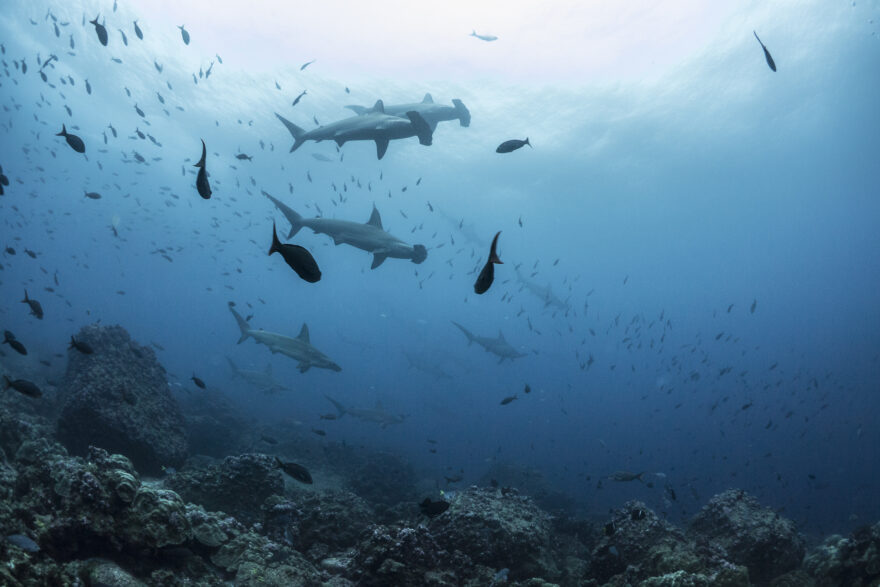
Scalloped hammerhead sharks in the Galapagos Marine Reserve
© Simon Pierce

The problem

The Galapagos Islands are located in the Eastern Tropical Pacific, one of the richest marine ecosystems on Earth. This region is also subject to intense fishing activity by international industrial fleets, and illegal, unreported and unregulated fishing is rife, posing a major threat to both wildlife and the livelihoods of local artisanal fishers. While the expanded Galapagos Marine Reserve provides a refuge for wildlife, damaging fishing practices such as long-lining and drifting fish aggregating devices (dFADs), both illegal within the Reserve, are nevertheless having an impact.

dFADs are floating devices used by tuna fleets to attract fish which can then be caught more easily, but they also attract other ‘non-target’ species such as sharks and turtles. dFADs released in international waters are entering the Galapagos Marine Reserve in worrying numbers, entangling and killing wildlife, as well as contributing to coastal pollution.

Long-lining is a fishing technique that uses lines with baited hooks which can stretch over vast distances of up to 100 kilometres, and is notorious for high levels of ‘bycatch’, ensnaring animals such as sharks and albatrosses. Wildlife is particularly at risk in the High Seas, such as in the area to the south east of the Galapagos Archipelago, though illegal long-lining is also a persistent problem within the Marine Reserve itself.

A lack of joined-up ocean protection is leaving many of the Archipelago’s most endangered marine species exposed to these threats, and there is an urgent need for better data to inform both policymakers and conservation managers.

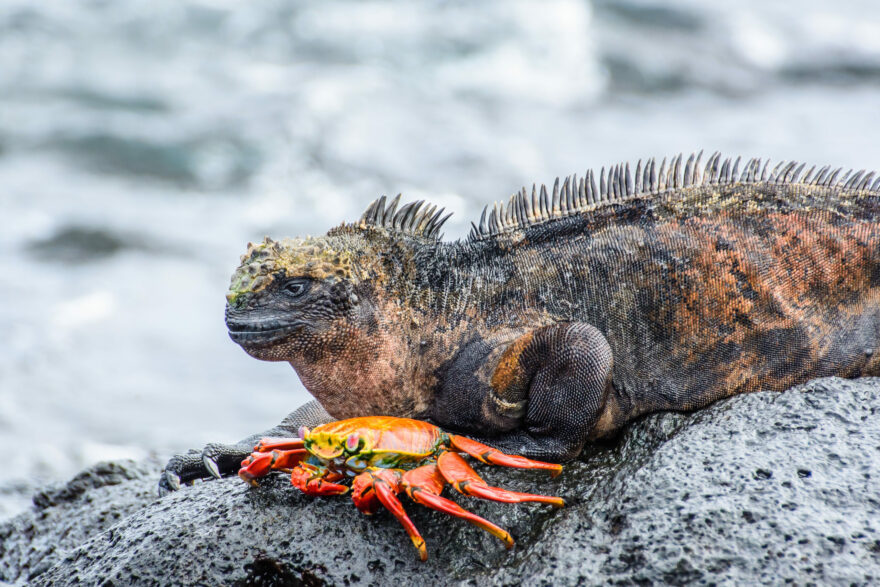
Galapagos marine iguana and Sally Lightfoot crab
© Scott Johnson

How we’re tackling it

We are supporting research into the effectiveness of existing marine protected areas, establishing baseline measurements and tracking the movements of migratory species both inside and outside of the Galapagos Marine Reserve. This allows us to track the impact of ocean protection measures over time, and to build a stronger case for establishing new marine protected areas, including on the High Seas. From the majestic waved albatross to the less celebrated Galapagos slipper lobster, we are building up a detailed picture of the incredible marine biodiversity around Galapagos.

We are also supporting local authorities to collect more data on drifting fish aggregating devices (dFADs) entering the Galapagos Marine Reserve, helping to build the case for stronger regulations and greater transparency from the tuna industry. Underpinning all of our work on ocean protection and fisheries is a commitment to supporting Ecuadorian early career ocean professionals, strengthening local capacity and building the foundations for effective long-term protection.

Waved albatrosses in Galapagos
© Enzo Reyes

Project goals

Our work on fisheries and ocean protection aims to:

  • Protect marine species including sharks, turtles and albatrosses from destructive fishing methods such as long-lining and drifting fish aggregating devices (dFADs)
  • Ensure that scientific research results in practical tools for local authorities and conservation managers to measure how well marine protected areas are working and manage them effectively
  • Build the evidence for greater ocean protection around Galapagos, including on the High Seas
  • Support Ecuadorian early career ocean professionals and help to build a sustainable ‘blue economy’ in Galapagos
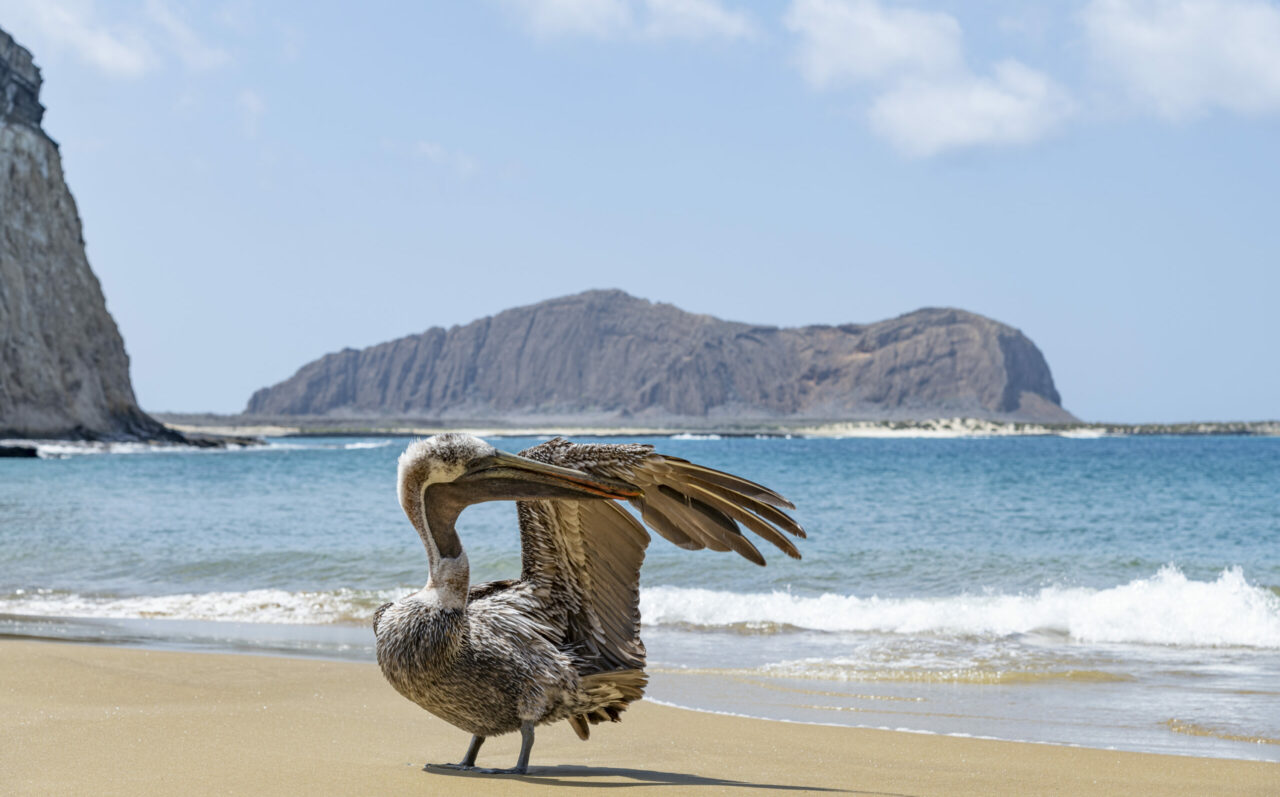
Pelican on a beach in Galapagos
© Jon Anderson

Project updates

Fish market in Galapagos
21st May 2026
Ocean protection Overfishing

Can fishing and conservation coexist in Galapagos?

Galapagos is a globally important refuge for marine life, but it’s also a place where people depend on the ocean for their livelihoods, making fisheries management a complex conservation challenge.
Read more
Scalloped hammerhead sharks in Galapagos
24th Sep 2024
Ocean protection Overfishing

Can the High Seas Treaty protect marine life in Galapagos?

What does the High Seas Treaty mean for the marine life of Galapagos, and how well are the existing Marine Reserves in the Eastern Tropical Pacific working?
Read more
Diving with hammerhead sharks in Galapagos
20th Jun 2024
Events Ocean protection

Underwater Wonders of Galapagos Webinar 2024

Shark scientist Dr Alex Hearn joined us on 19 June for a fascinating ocean webinar, revealing his latest findings on the health of marine life around Galapagos.
Read more
Spotted eagle ray off Puerto Ayora, Santa Cruz
5th Dec 2023
Ocean protection Women in science

A week in the life of a female marine researcher

In our latest blog, Andrea Vera invites us to join her on a recent expedition, supported by GCT, to monitor marine species including one of the world's most curious creatures, the hagfish.
Read more

How you can help

With your support, we can restock the seas around Galapagos with abundant and healthy marine life.

Get the latest news from Galapagos

Join our mailing list to receive our monthly email newsletter, bringing you the latest news on Galapagos and our work to protect the Islands.

This field is hidden when viewing the form
Share This Page