




Overview
The Galapagos Marine Reserve is home to more than 50 species of shark and ray, with important nursery grounds located amongst the sheltered mangrove lagoons around Isabela and San Cristobal. Industrial fishing, habitat loss, pollution and boat strikes threaten sharks and rays both inside and outside the Reserve, which is why we’re supporting research to better understand the needs and behaviours of these fascinating creatures. Our aim is to ensure that they are protected throughout their lifetimes, from the nursery grounds right out to the High Seas.
Lead Project Partners
Sharks and rays in numbers
> 100 m
sharks harvested from our oceans globally every year by humans
50
species of shark and ray rely upon Galapagos for refuge and habitat
> 700
Each year over 700 whale sharks visit the Galapagos Marine Reserve
50 %
Estimated drop in global whale shark population in the last 75 years
The problem
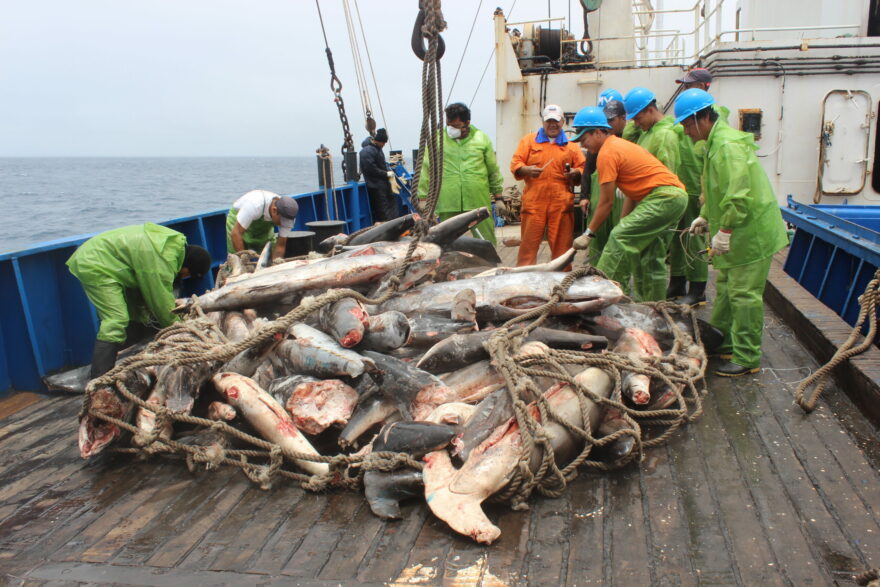
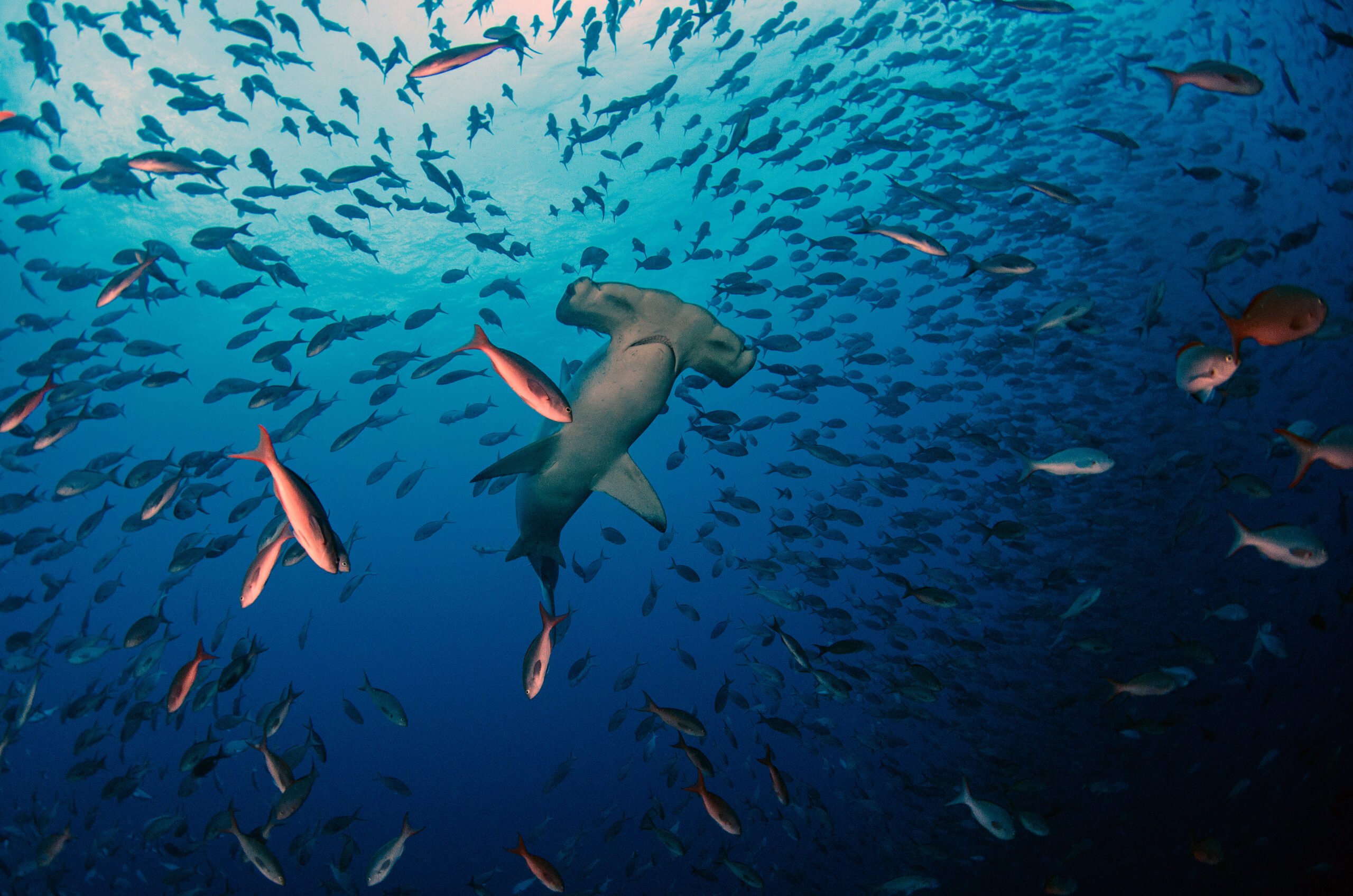
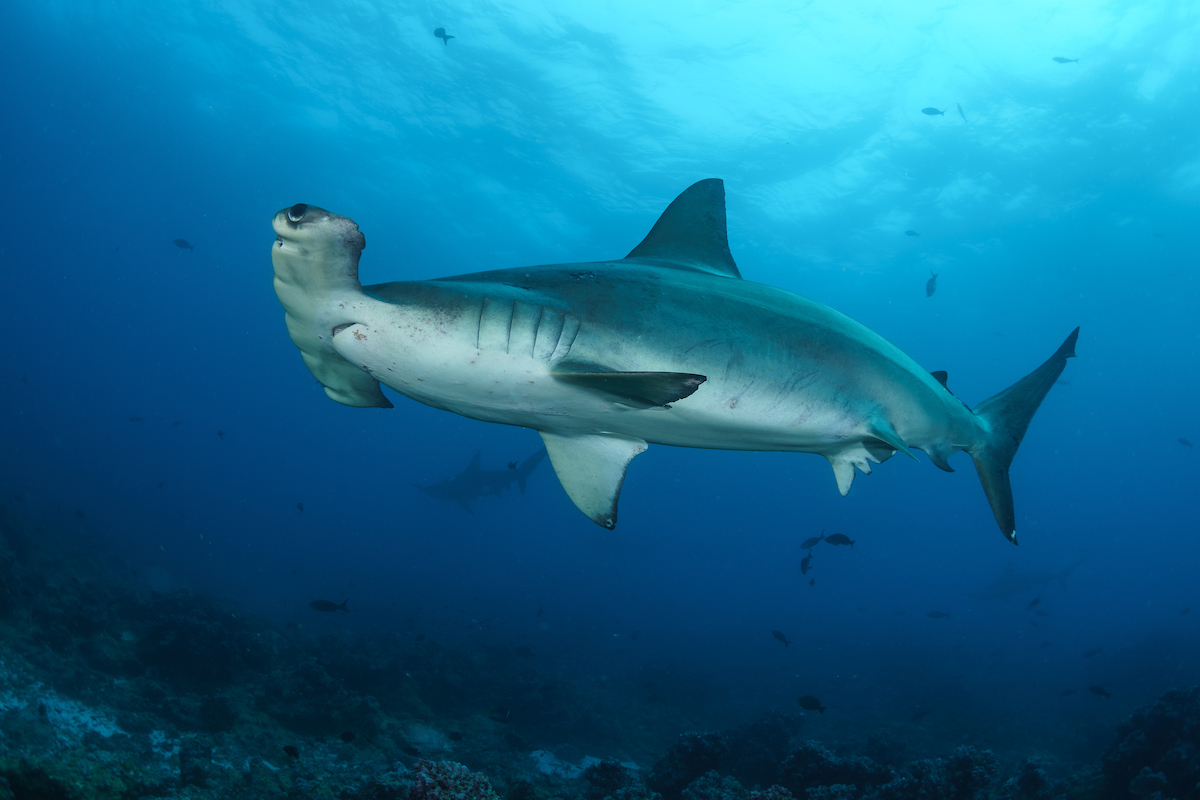
Every year, globally, humans harvest 100 million individual sharks from our oceans. Endangered species, including the scalloped hammerhead and whale shark, face threats from overfishing and bycatch. Recent research has also shown that the ingestion of microplastics may threaten the health of whale sharks and other filter-feeding marine species such as manta rays.
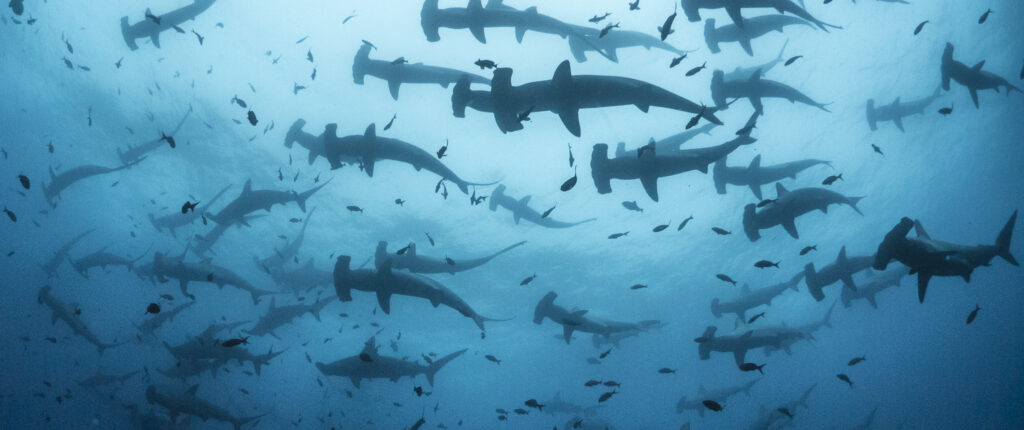
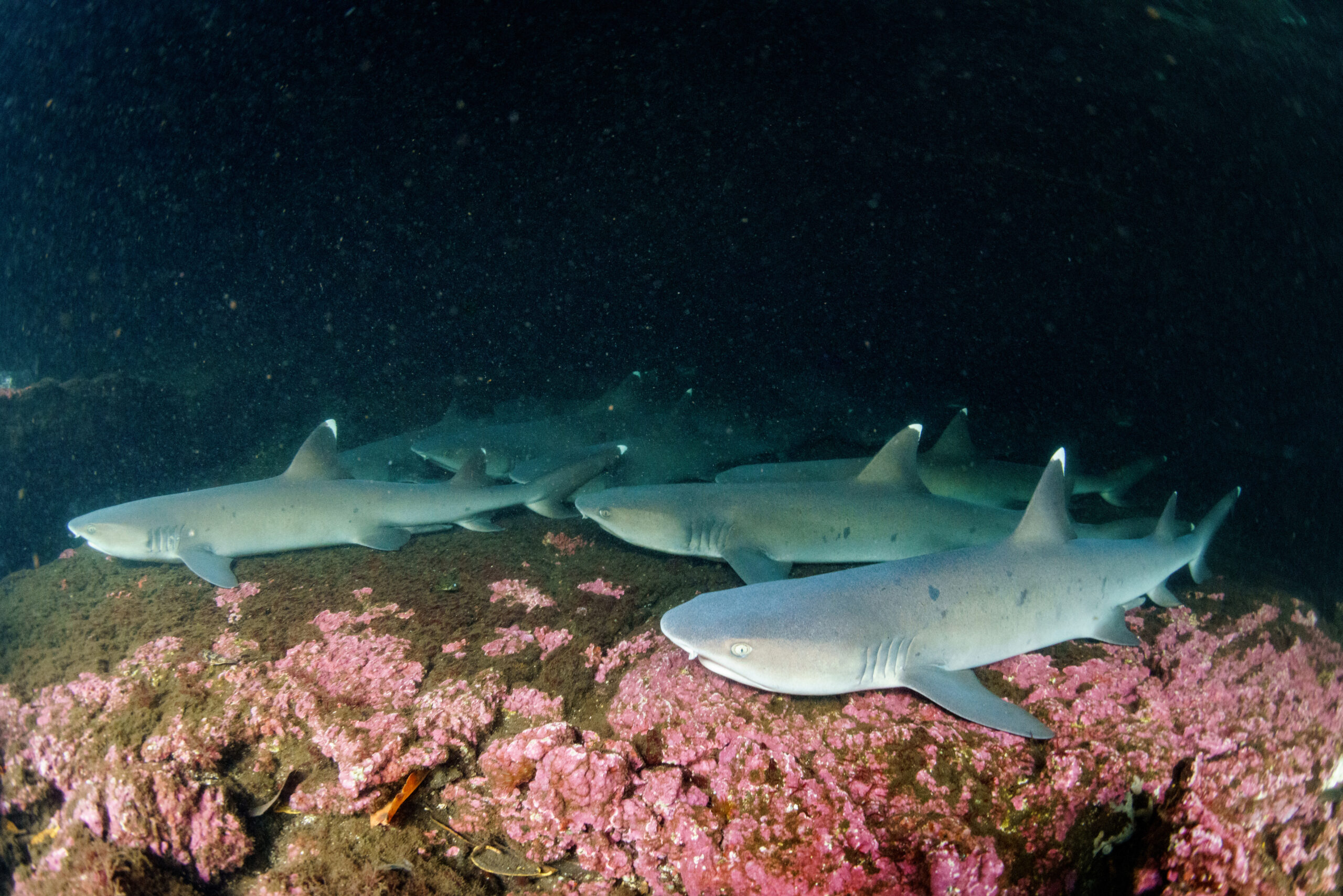
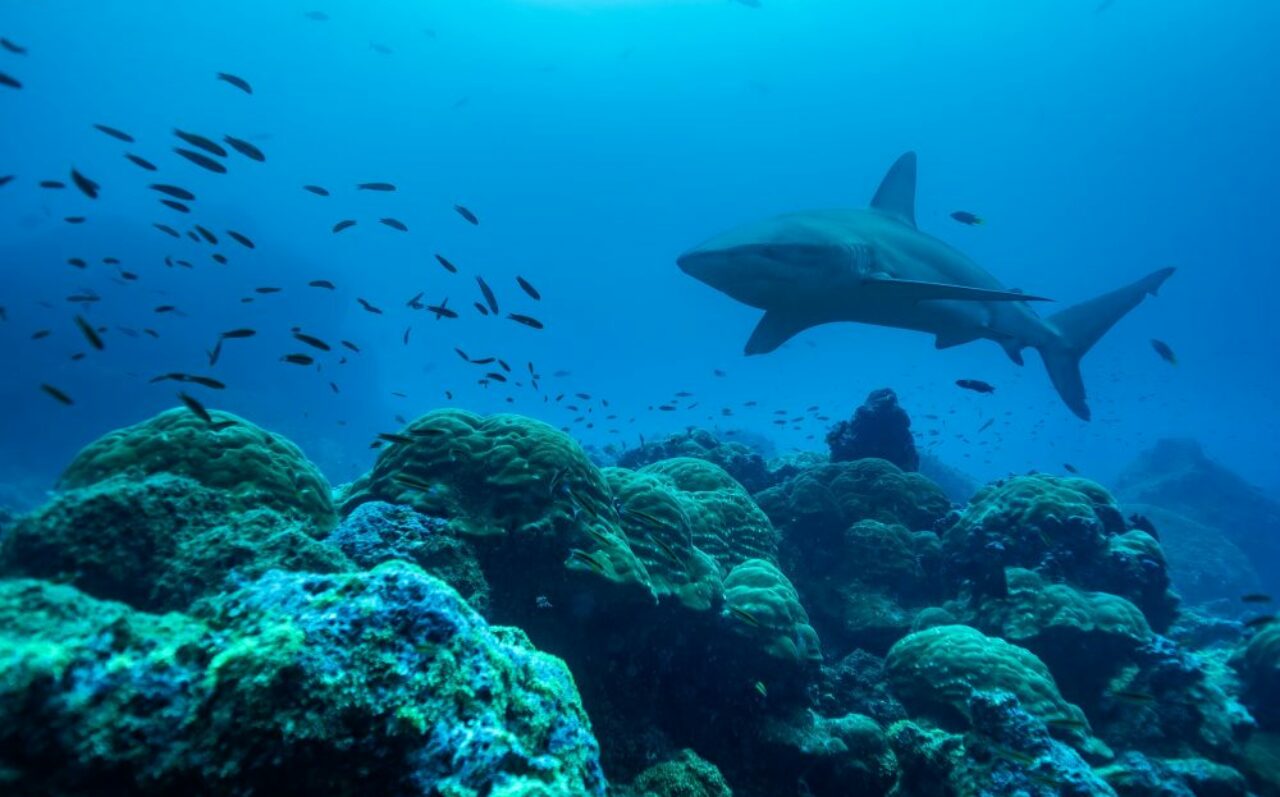
The Galapagos Marine Reserve (GMR) is a crucial location for Critically Endangered scalloped hammerheads and is one of the only places globally where large numbers still reside. Its whale shark population is also globally rare, with the vast majority mature females, as opposed to juvenile males found in other hotspots. Shallower waters in the GMR also provide important sites for blacktip and hammerhead pupping grounds, making it vital that we protect them. These nursery grounds were designated in 2023 as one of the IUCN’s first Important Shark and Ray Areas (ISRAs), recognising their critical role in the lifecycle of a host of threatened shark and ray species.
Due to the lack of data on rays in Galapagos, their population status and conservation needs are poorly understood. To effectively protect these species from threats such as fishing and tourism activities, we need to find out where they go, how many there are and where they breed. Once these questions have been investigated, we can work towards ensuring their conservation needs are met.
How we’re tackling it
The research we have already funded has helped to improve our understanding of how species such as whale sharks migrate between Galapagos and other areas of the Pacific. This data was vital in the creation of the new Hermandad Marine Reserve in 2022, and we are continuing to build the case for protecting at least 30% of Ecuador’s waters by 2030. We also want to make sure that nursery grounds within the Galapagos Marine Reserve are properly protected.
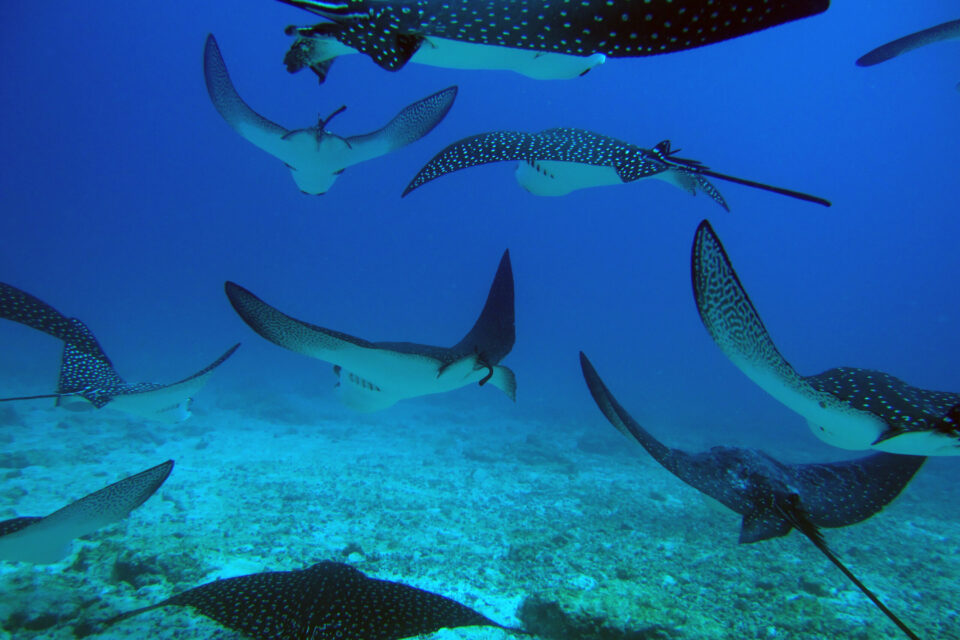
The rays team is using drones to locate and count the number of rays, tagging them with acoustic and satellite tags to track their movements over time and taking tissue samples for genetic analysis. Due to the individually unique spot patterns on eagle and manta rays, the team also take photo-ID pictures, adding vital information to the growing photo database.
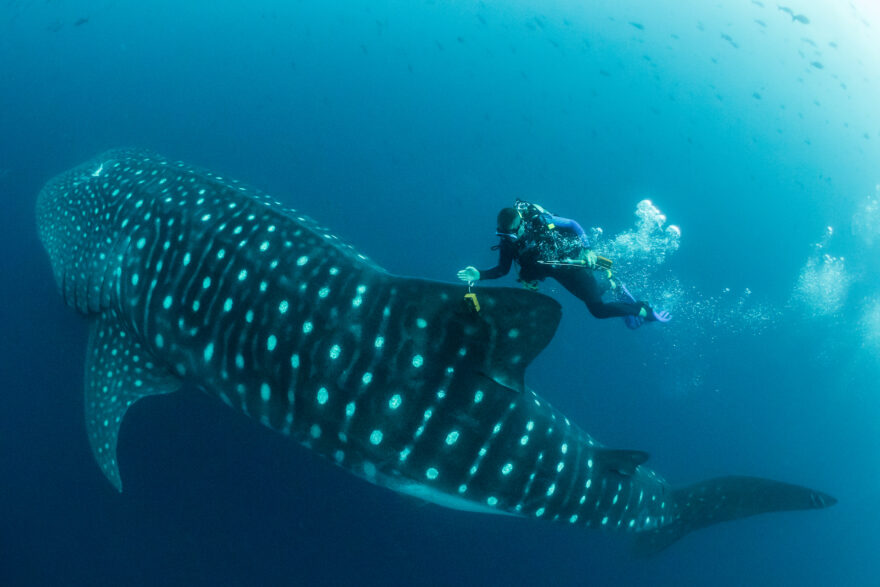
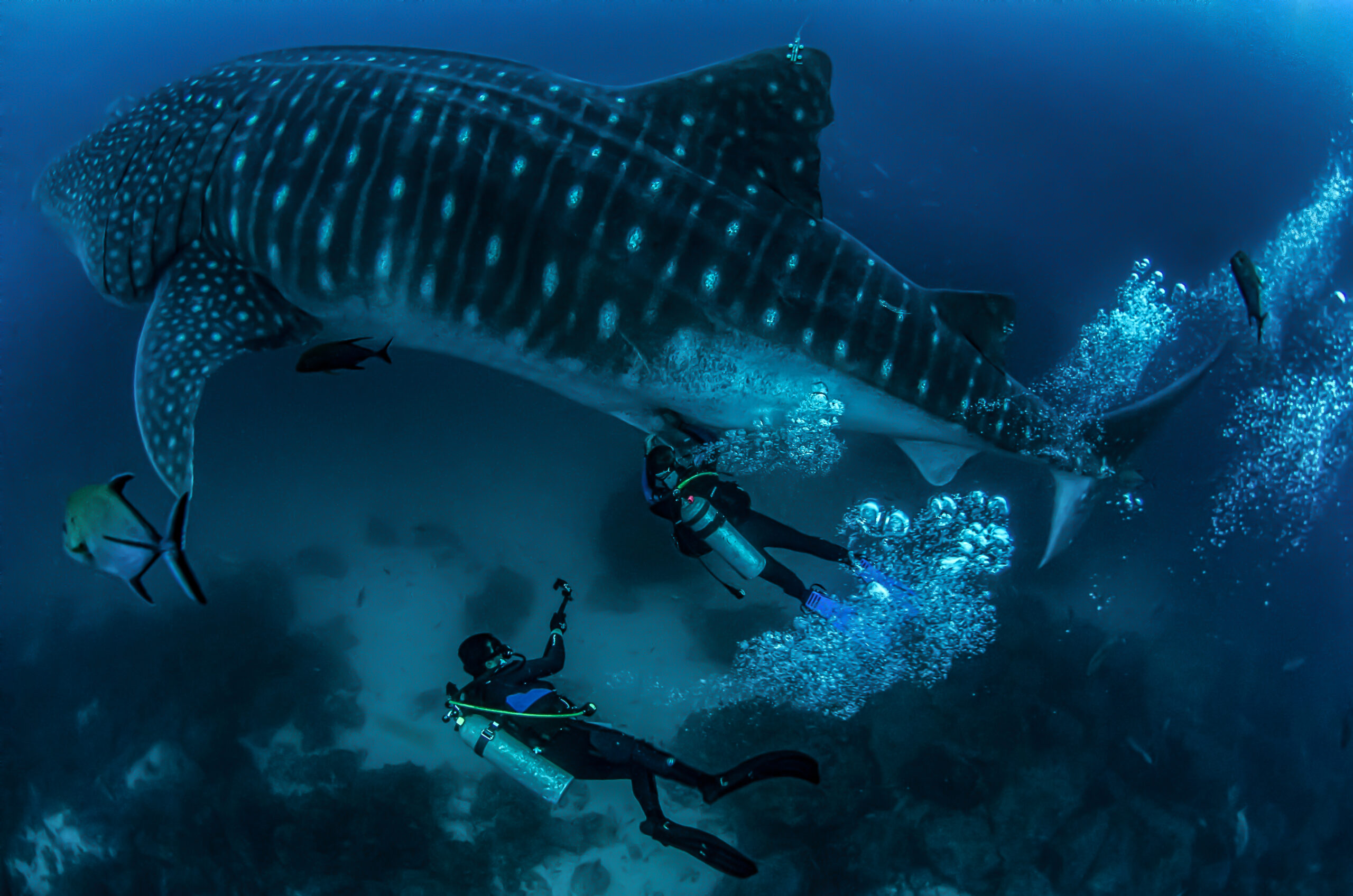
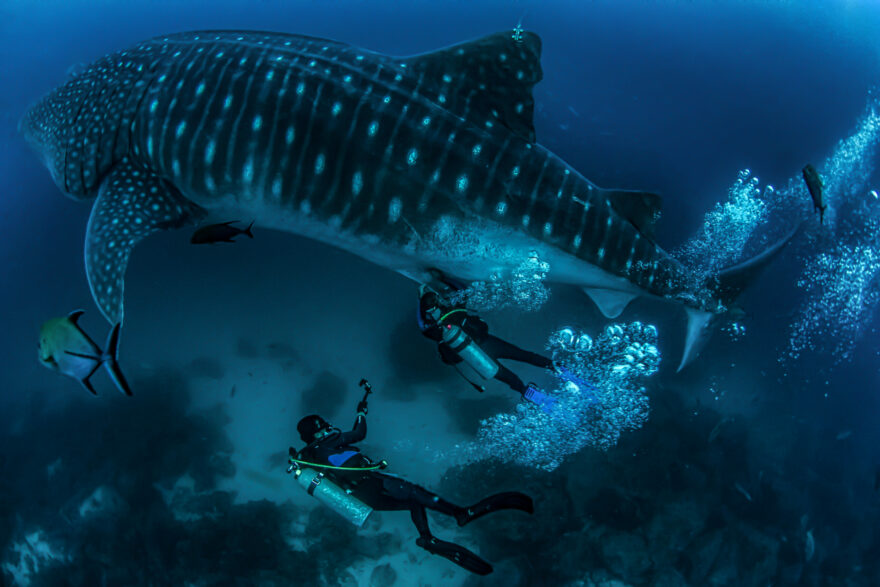
The Galapagos Whale Shark Project team has now tagged more than 100 whale sharks, recording the position of the sharks each time they surface, allowing them to build a picture of their movements. A growing photo-ID catalogue of whale sharks means we are now seeing an increasing number of re-sightings and have been able to prove the international connectivity of whale sharks. Whale shark tags have also been picked up transmitting from fishing ports in mainland Ecuador, underlining the threat that the sharks face from fishing activity outside the protected areas. In addition to understanding the sharks’ migration, the project team are using blood sample data, including microplastic analysis, to investigate the sharks’ overall baseline health and reproductive state, and they have carried out the world’s first ultrasound on a wild whale shark.
Photo gallery
Click on an image to view larger
Project goals
The project aims to:
- investigate the impacts of fishing activity, tourism and pollution on sharks and rays, both within the Galapagos Marine Reserve and on the High Seas
- improve our understanding of shark nursery areas in Galapagos
- improve our understanding of migratory routes and how they connect Galapagos with other parts of the Pacific
- support the continued expansion of marine protected areas to create a ‘swimway’ between Galapagos and Costa Rica’s Cocos Island
- undertake a comprehensive study of golden, spotted eagle and oceanic manta rays in Galapagos
Galapagos Whale Shark Project
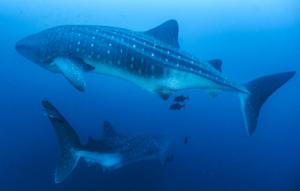
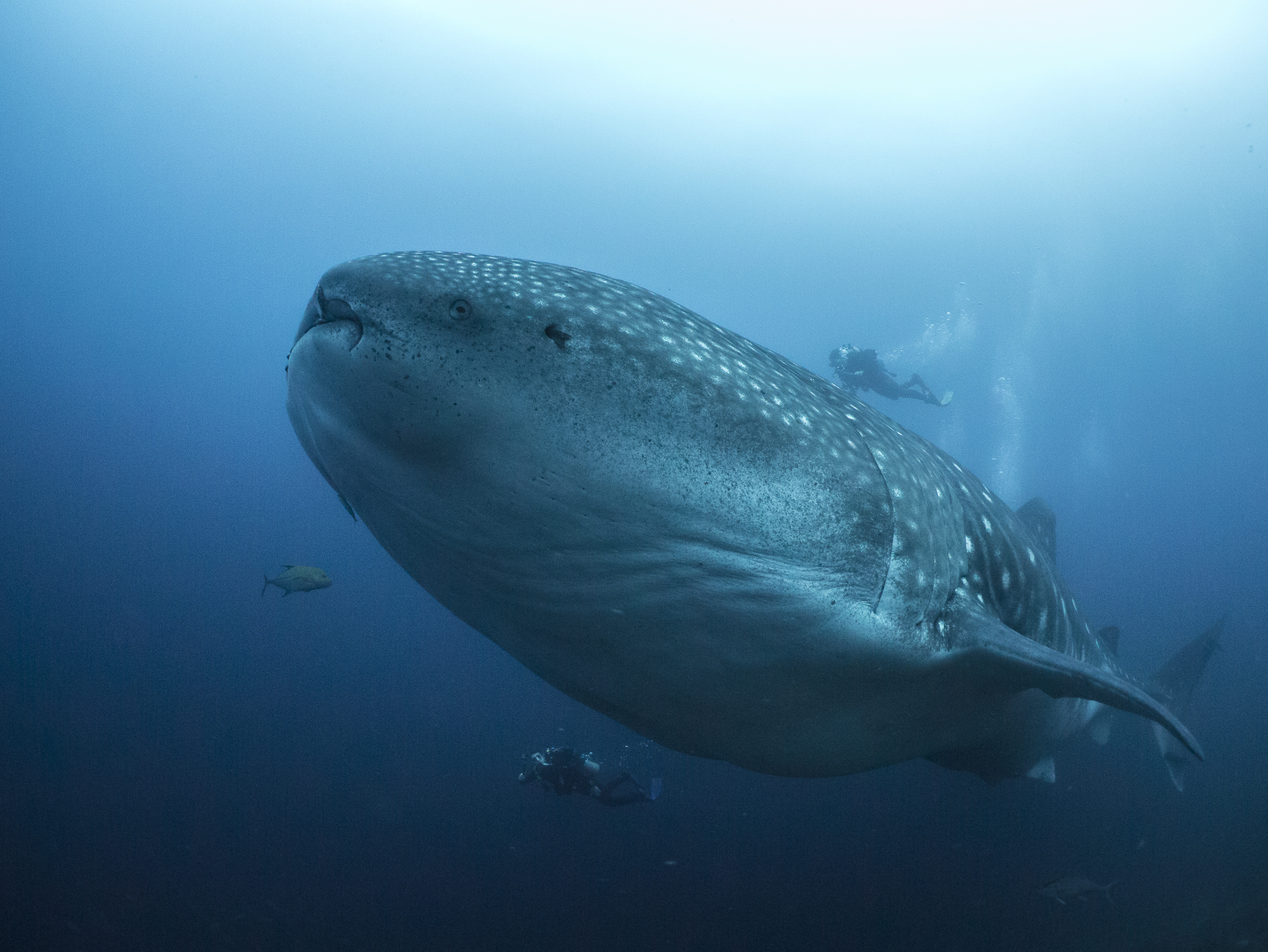
The whale shark is the world’s largest fish, reaching lengths of up to 20 metres, yet surprisingly little is known about it. We still do not fully understand their migratory movements and are yet to discover where they go to breed, give birth and spend the first few years of their life. These basic life history elements are not only interesting to know but also important if we are to successfully conserve this gentle giant, downgraded from Vulnerable to Endangered on the IUCN Red List in 2016.
The ground-breaking Galapagos Whale Shark Project, which GCT has supported since 2014, has already delivered crucial insights into their lives, providing evidence to support the creation of the new Hermandad Marine Reserve in 2022, and is key to building the case for greater protection of important marine migratory routes.
Endangered Rays of Galapagos
The Galapagos Marine Reserve is home to over 50 species of shark and ray, yet there is very little data for rays in Galapagos. The project team is looking at three species – giant oceanic manta rays, golden cownose rays and spotted eagle rays – in an effort to improve our scientific understanding of rays in Galapagos, including where they give birth and how connected the populations are between islands, helping us to prioritise and target management efforts across Galapagos.
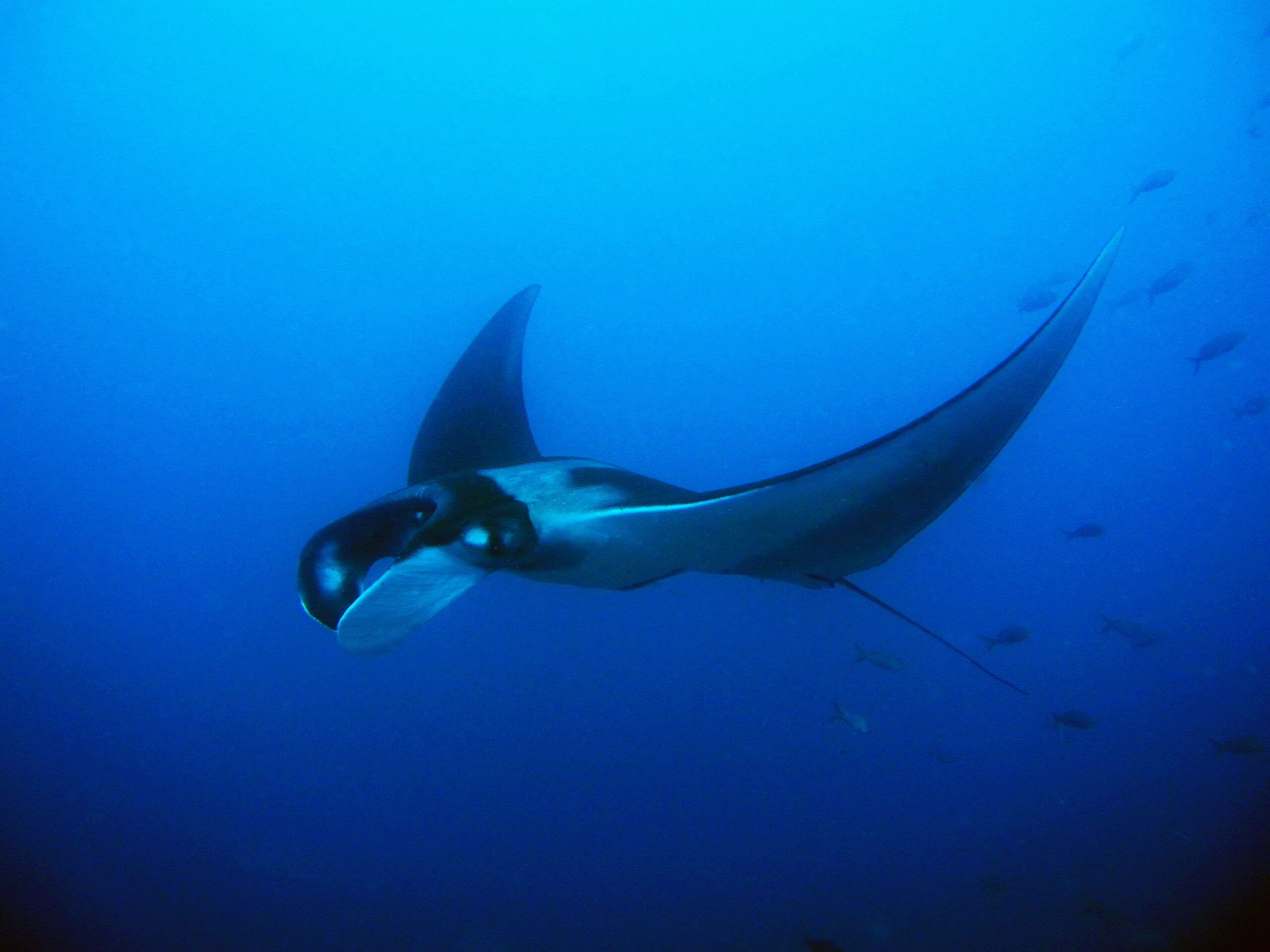
The giant oceanic manta ray (Mobula birostris) is Endangered globally, and early genetic studies have indicated that there is likely a resident population in Galapagos. They are found in significant numbers around the coast of Isabela island.
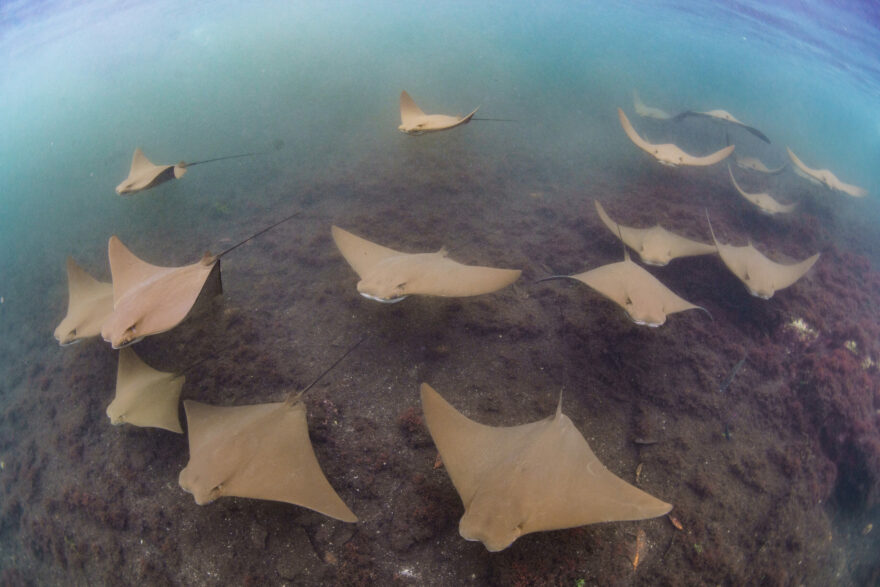
The golden cownose ray (Rhinoptera steindachneri) is considered Near Threatened throughout its range, but no assessment to date has been made on the Galapagos population.
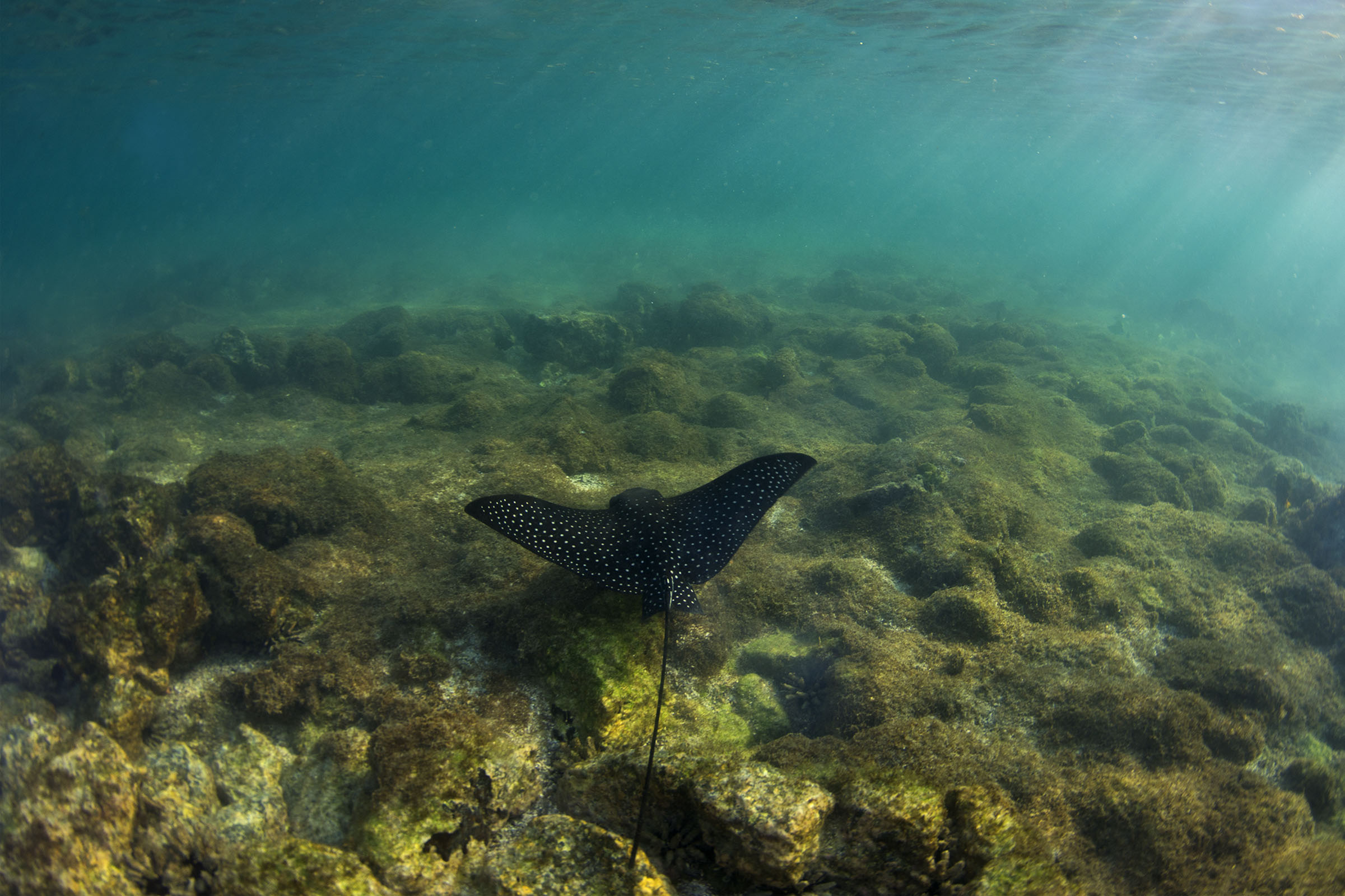
The spotted eagle ray (Aetobatus ocellatus) is considered Vulnerable throughout its range, though recent research has suggested that the Galapagos population may be a separate species.
This project is kindly supported by
Project updates
Galapagos Day 2025: The Truth About Sharks
Uncovering the mysteries of Galapagos rays with citizen science
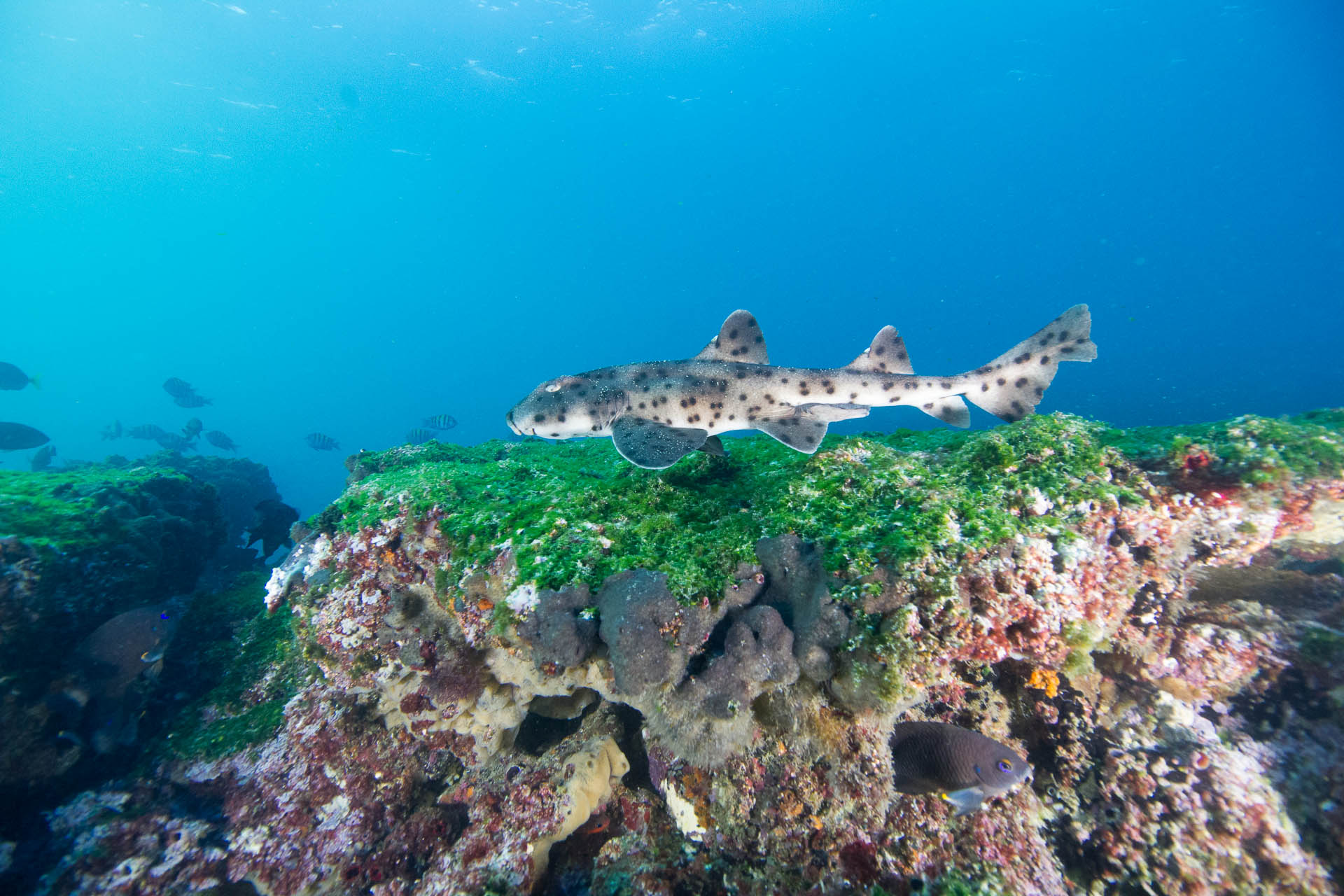
Uncovering the mysteries of the Galapagos bullhead shark
Defend our oceans
Protect the endangered sharks and rays of Galapagos by donating today or by adopting a whale shark.