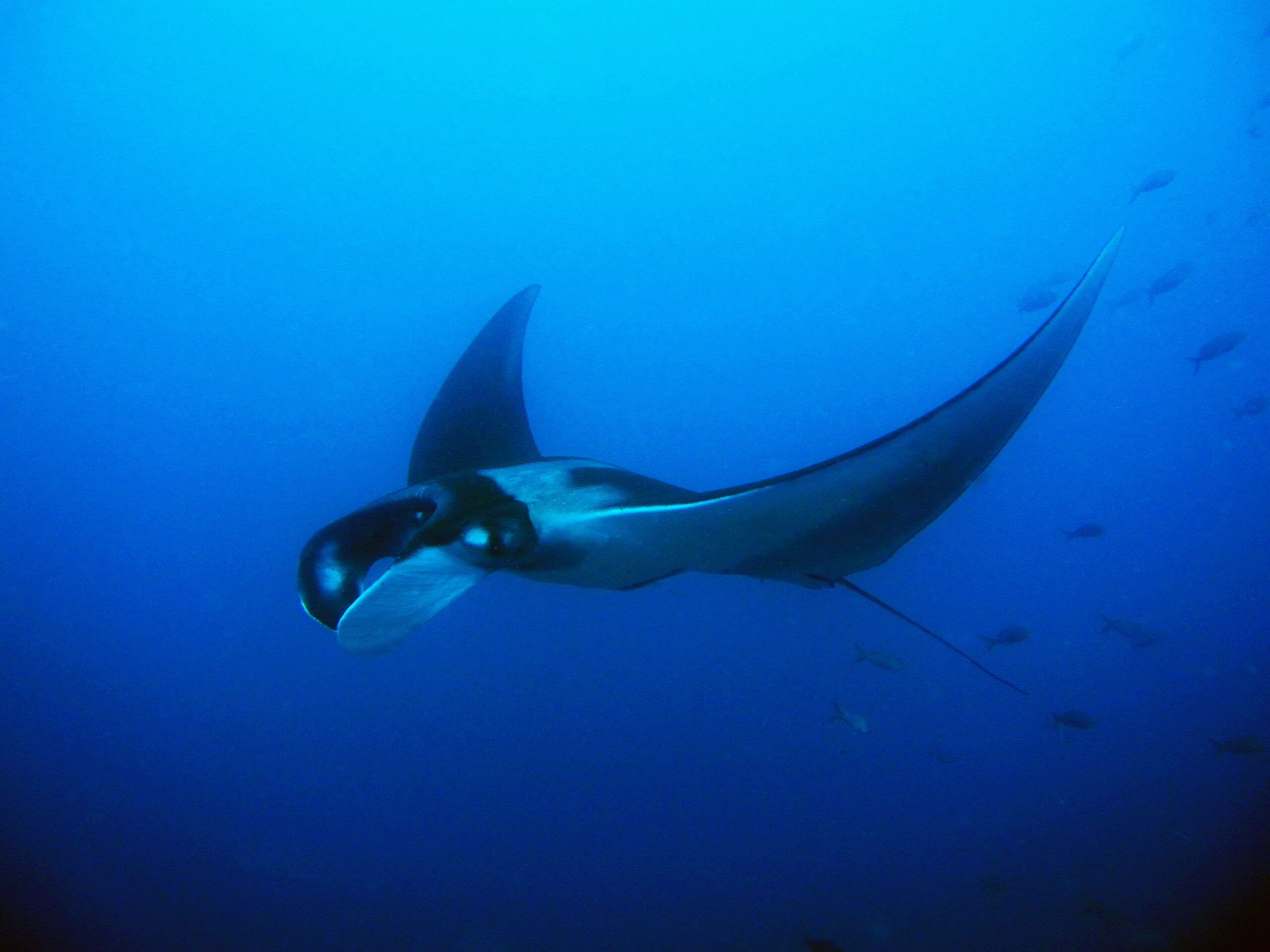
The oceanic manta ray is the largest species of ray in the world. They can be found throughout tropical and sub-tropical regions, including the nutrient-rich waters surrounding the Galapagos Islands. Manta rays spend a significant proportion of their life out on the open ocean, diving hundreds of metres into the deep in search of zooplankton to feed on. They also spend a lot of time visiting cleaning stations where small fish will offer their cleaning services, removing parasites and dirt from their bodies.
Manta rays are instantly recognisable by their large, diamond-shaped bodies with elongated, wing-like pectoral fins and dorsal white shoulder markings that create a distinctive ‘T’ shape in black. Each ray has a unique spot pattern on its underside, similar to a human fingerprint, which allows scientists to identify individuals. Mantas have large gill plates, which have two structures fused to them called cephalic lobes. These cephalic lobes help to channel plankton-rich water into their mouths while feeding. Mantas have a range of different feeding behaviours, including performing somersaults, known as barrel rolling and creating feeding chains with other mantas, which maximises food intake.
Oceanic manta rays are generally solitary; however, they will aggregate around cleaning stations and when feeding or mating. A female will typically give birth to one infant (known as a pup) every two to three years after a gestation period of approximately a year. They will give birth to fully developed, live young, which is a process known as ovoviviparity. Pups are born with their wings curled up, which has resulted in the nickname ‘manta burritos’. Once born, they will immediately leave their mother and start their independent life at sea.
Oceanic manta rays in Galapagos
Where to see them: Giant manta rays can be seen in the waters off Wolf and Darwin islands and in the channel between Santiago island and Sombero Chino islet. An aggregation of mantas has also been found off the coast of Isabela island.
When to see them:The best time to spot rays is between December and May. This is when the water is slightly warmer and visibility is clearer.
Commercial fishing, such as longline fishing, poses a significant threat to rays outside of the Galapagos Marine Reserve. This involves nets as large as 10 metres by 3 metres being dragged across the seabed.
Another potential threat to rays is microplastics. This is yet to be confirmed, but some theories suggest that microplastics interfere with food chains and can stunt the growth of these fish.
New research has found that mantas off the coast of Isabela island are being accidentally struck by boats,including those taking tourists to and from the island– an alarming consequence of a growing tourism industry, which is creating challenges for wildlife across the Archipelago.
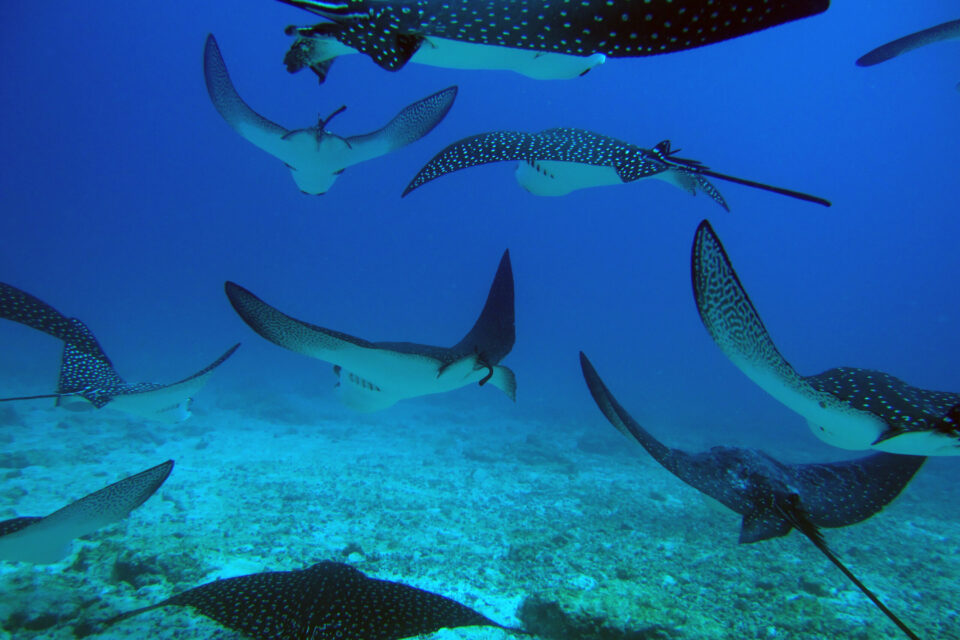
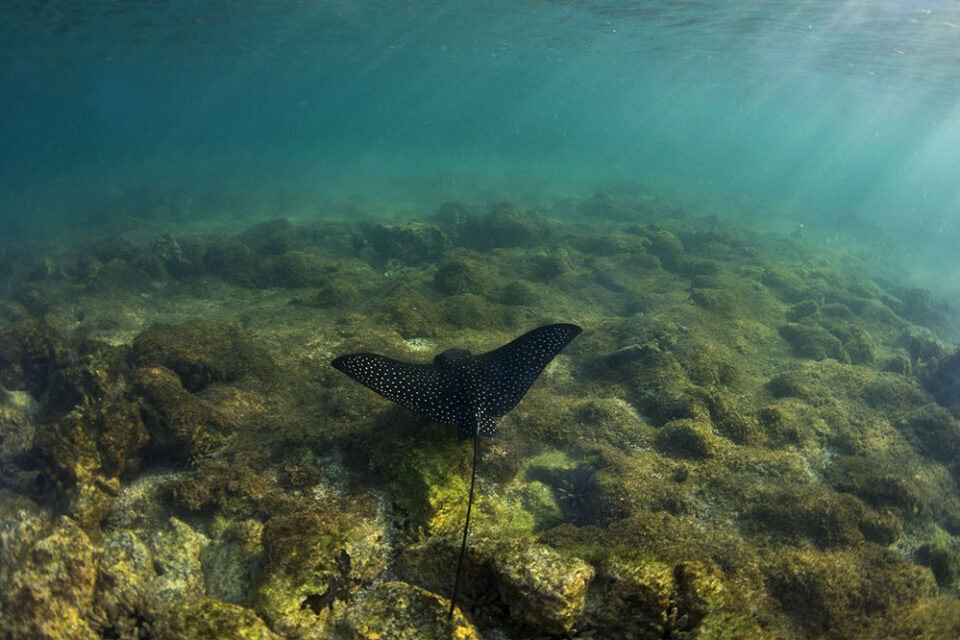
We are working with partners to ensure all ray species in Galapagos are protected through our Plastic Pollution Free Galapagos programme and our Endangered Rays of Galapagos programme, which will benefit ray populations all over Galapagos.
In 2025, manta rays were uplisted to CITES Appendix I. A CITES I status is the highest level of international protection a species can get under the Convention on International Trade in Endangered Species of Wild Fauna and Flora (CITES). This landmark decision prohibits all international commercial trade of these animals.
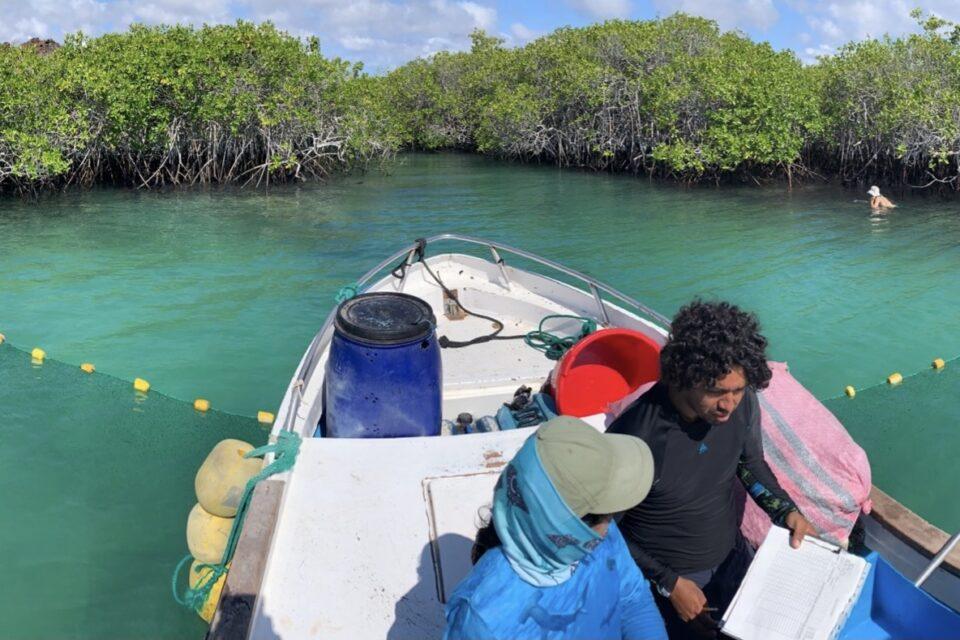
On Isabela island, we are supporting the researchneeded to track and protectoceanic manta rays, whilecollaborating with the Isabelacommunity, including local tour operators, to integrateconservation practicesinto local tourism. Across Galapagos, we are bringing together partnersacross the tourism industry to address the issues caused bythe rise in tourism and developa tourism model that protects wildlifewhile supporting theeconomic and social needs of communities.
Uncovering the mysteries of Galapagos rays with citizen science
We chatted with Diana Pazmiño at the Universidad San Francisco de Quito about her work and the vital role citizen scientists play in helping to improve our understanding of the rays of Galapagos.
How are citizen scientists protecting the Mobula rays of Galapagos?
We spoke with Farah Hamdan at the Galapagos Mobula Project about her work and the vital role citizen scientists play in helping to protect the Mobula rays of Galapagos.
An update from the field as our Endangered Rays of Galapagos project, led by Dr Diana Pazmiño, continues vital work researching and protecting three species of rays found across the Galapagos Archipelago.
Barriers in a sea of sharks and rays: The role of genetic connectivity in the ocean
When we think of elasmobranchs (sharks, rays and skates), most people picture large predators like great white sharks or the peaceful plankton-feeders like oceanic manta rays that roam vast and interconnected oceans. But elasmobranchs come in various...