Guess who’s back…
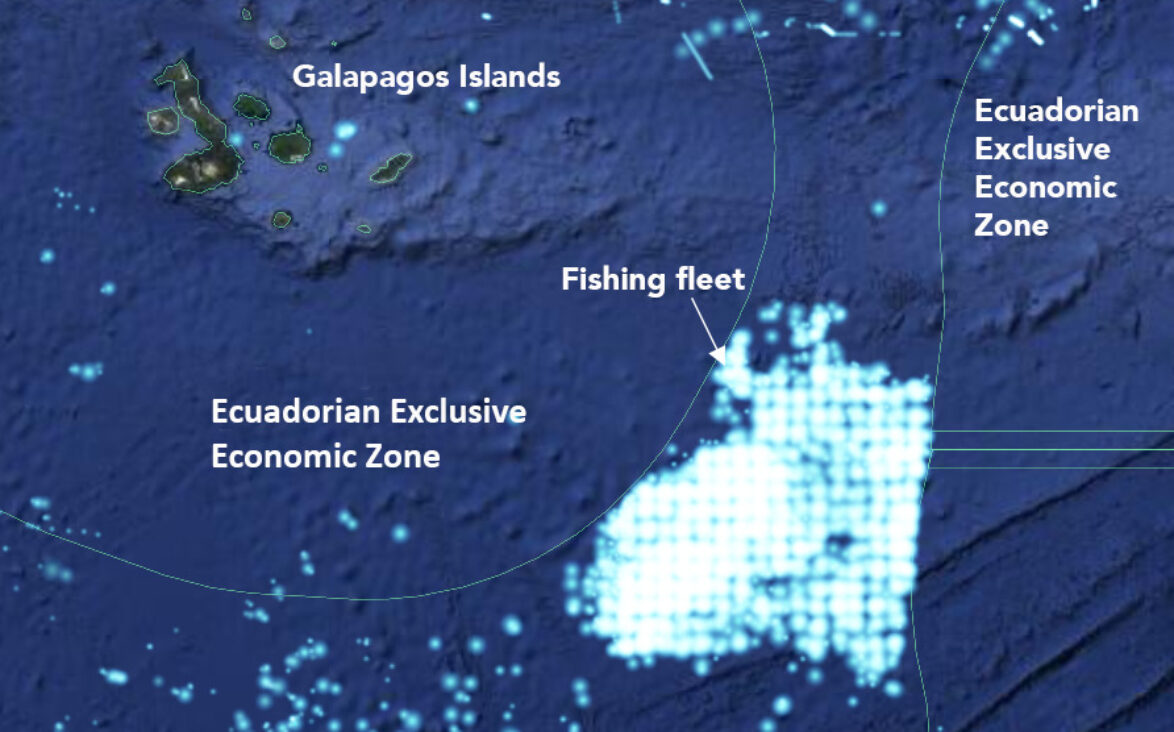
Earlier this year, ominous news reached us from Galapagos. Local media, alerted by Ecuadorian fishers, reported that a huge Chinese industrial fishing fleet was once again massing just 60 miles from the edge of the Galapagos Marine Reserve.
We’ve been here before. Back in 2020, while the world’s attention was distracted by the COVID-19 pandemic, a fleet of more than 250 fishing vessels was spotted in the same area, sparking widespread alarm. Technically, they are not breaking any laws. These rich squid fishing grounds are situated in international waters. But it’s not just humans that come here for the squid.
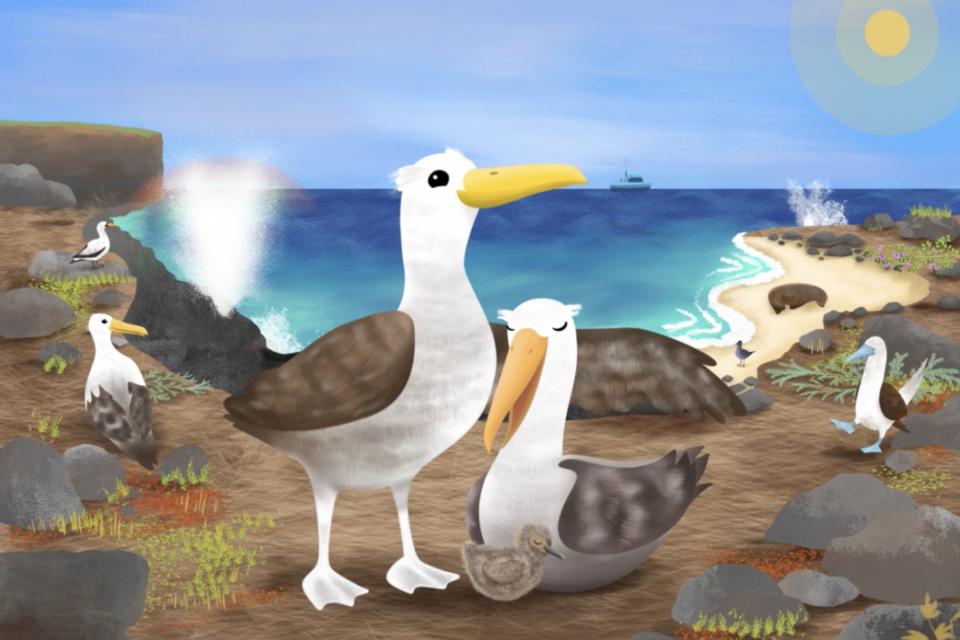
The magnificent waved albatross, the largest bird in Galapagos, feeds mainly on fish, squid and other invertebrates, frequently scavenging near fishing boats. They often feed at night, when the squid swim closer to the surface. Night time is also when the squid jiggers go to work. Bright lights are used to lure the squid to the surface, where dozens of longlines with baited hooks lie in wait.
Longlining is banned inside the Galapagos Marine Reserve because it’s so dangerous for sharks, rays and seabirds, but out here on the High Seas there is no such protection. The albatrosses become ensnared by the fishing lines, and many drown. It’s estimated that 100,000 albatrosses globally are killed every year by longlining. That’s one every five minutes.
The waved albatross is now considered to be Critically Endangered – the final waypoint on the road to extinction. More than 99% of the world’s breeding population nests on Española, a single island in Galapagos. If we want to save these beautiful birds, and the many other creatures being killed by destructive fishing methods, we have to act now.
Hope for the High Seas
Earlier this year, the UN High Seas Treaty was finally ratified, following negotiations that lasted nearly 20 years. This landmark agreement puts mechanisms in place to create new marine protected areas in international waters. Our hope is that this Treaty could empower governments in the region to create joined up protection that transcends borders, protecting the wildlife of Galapagos from industrial fishing and allowing local artisanal fishers to make a decent living.
This gives us hope for a better future, but we need your help. Cutting-edge research, such as tracking sharks and albatrosses, needs to continue, so that we can give policymakers the evidence they need to ensure that wildlife is protected. We need to give authorities the tools to monitor and enforce protected areas, and keep damaging fishing practices out of Galapagos. And we need to make sure that the local community sees the ‘spillover’ benefits of ocean protection, with healthy oceans that are full of fish, and a tourism economy that supports local fishers using sustainable methods.