Skip navigation
Go to home page > News > Our blog > In praise of plants: An interview with Sarah Darwin
23/07/2025 Botany

In praise of plants: An interview with Sarah Darwin

We spoke to botanist and artist Dr Sarah Darwin, a direct descendant of Charles Darwin, about the plants of Galapagos and her reflections on 30 years of Galapagos Conservation Trust.

Tom O'Hara

Communications Manager

How do you think your life has been shaped by being a descendant of Charles Darwin?

Charles Darwin did not really feature strongly in my childhood.  It wasn’t really until I became interested in botany that I started reading his work.  Nature was Darwin’s passion and inspiration, and I certainly share that with him.


Are there any aspects of Darwin’s theories that you feel are misunderstood?

A recent study found that in the UK, around 82% of people interviewed believe in evolution. Natural selection as a mechanism/process of evolution was first proposed by Charles Darwin and Alfred Russel Wallace in 1858, shortly followed by the publication of Darwin’s On the Origin of Species. So their theory has been around for nearly 170 years. But in my experience, many people do not fully understand evolution by natural selection. Evolution is an important part of scientific literacy, and this is something that we all need to know about – especially now with the environmental crisis and a broken human-nature relationship.

Charles Darwin

What are the biggest changes that you have noticed in Galapagos over the past 30 years?

The Galapagos economy is almost entirely reliant on tourism. There has been a dramatic increase in the number of tourists, residents and cars since I first went to the Islands 30 years ago.  Drinking water, food, goods and fuel all need to be imported. Pests are unintentionally introduced with these deliveries and can cause problems for biodiversity. Waste management is also a big challenge.

On the positive side, relationships between the different stakeholders within Galapagos have massively improved.  Progress has been made to integrate the needs of Galapagos citizens with research and conservation, but there is still a long way to go. When I first went to the Islands, there were lots of exotic tropical flowers growing in the towns and villages.

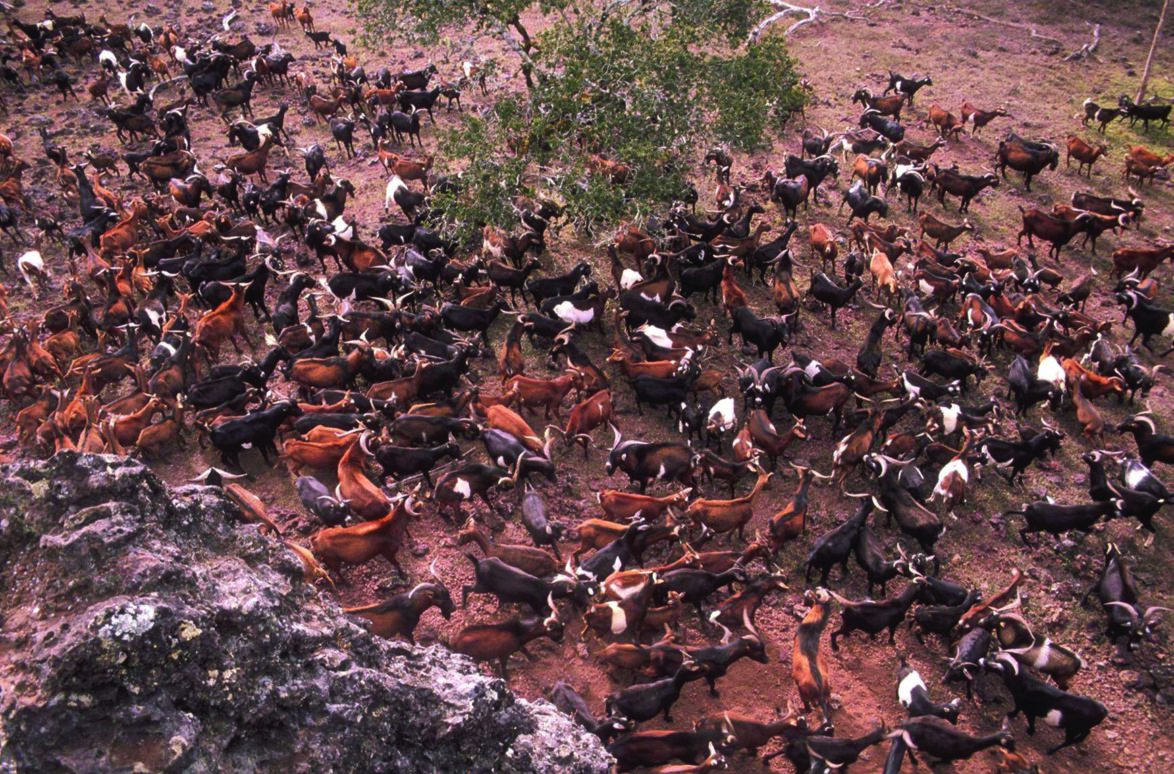
Now, native Galapagos plants are often used in municipal areas, and many people grow native plants in their gardens. While this is a small thing, it shows a shift in perspective and pride for local flora. Thirty years ago, there were still introduced goats on many islands, eating the native vegetation and depriving endemic species like giant tortoises and iguanas of food.  Thankfully, many islands are now free of goats. So, there is a lot to celebrate.

Invasive goats in Galapagos
Invasive goats in Galapagos © Charles Darwin Foundation

A recent study found that in the UK, around 82% of people interviewed believe in evolution.

Could you explain the importance of restoring native and endemic flora to the Islands?

The Galapagos Islands are home to many endemic plant species, which have most likely evolved over millions of years in the Islands. They are sufficiently different from their nearest relatives that scientists have described them as separate and endemic species. So these endemic Galapagos species are important, in part, because they are found nowhere else in the world. If they become extinct in the Galapagos, that is it!

Plants are primary producers – they create their food from sunlight through photosynthesis. Plants form the base of the food chain, providing food and habitats for other living things, and therefore, they are essential to biodiversity.

There are many relationships between plants and animals, some of which science has probably not even discovered yet. However, we do know, for example, that the endemic Galapagos carpenter bee (Xylocopa darwini) collects pollen from the endemic tomato flowers to feed to their young and that the giant tortoises are partial to munching on the tomato fruit.  So if the tomatoes were to become extinct in an area, the bees and tortoises might suffer too.  We need to conserve what we have and restore what we have lost.

Galapagos carpenter bee
Carpenter bee © Shannon D'Arcy
Prickly Pear Cactus (Opuntia)

Plants of Galapagos

Discover more about the endemic and ecologically important plant species of Galapagos.

Read more

Do you have a favourite Galapagos plant?

There are so many wonderful plants in Galapagos.  I think that the tomatoes would have to be some of my favourites. There are two endemic species of tomatoes (Solanum galapagense and Solanum cheesmaniae), which I spent many years studying. I found these beautiful little plants growing as pioneer species in the lava fields on Fernandina island, and along the rugged northern coastline of Santa Cruz, being splashed by seawater. They have yellow to orange fruits, and the leaves have a very pungent citrussy/tomatoey smell.  While their fruits are quite acidic to taste, certain characteristics have been successfully bred into cultivated tomatoes, using traditional plant breeding methods.  We all will have eaten a bit of Galapagos tomato, so remember that when you next tuck into a pizza!

What gives you hope for the future of Galapagos?

Galapagos is the most intact tropical archipelago on the planet, so that is great news. There are enormous numbers of people who work tirelessly to support Galapagos, both in the Islands and beyond.

There is something that we can all do to help safeguard the future of the Galapagos. Whether it’s fundraising, leaving a charitable bequest/legacy gift or donating whatever you can to GCT.  You can get involved with events or help raise awareness about the Galapagos Islands.  Galapagos Conservation Trust is an incredibly well-run charity.  I’m always impressed by how the projects that they support have a scientific underpinning, and they work closely with Galapagos communities – the true guardians of the Islands.

None of us should sit back and passively hope things will get better. It is important to believe that a positive future is possible and take action to get there.

Tomatoes in Galapagos © Toni Darton

How you can help

Discover the ways you can support our conservation work in Galapagos.

Discover more

Related articles

Arid landscape on Fernandina
31st Oct 2025
Botany History of Galapagos

Discover Darwin's plants

Open a secondary school biology textbook and you’ll find the Galapagos finches being used to illustrate the process of natural selection. Galapagos plants rarely get a look in, but maybe they should.
Read more
29th Sep 2021
Botany Evolution and genetics

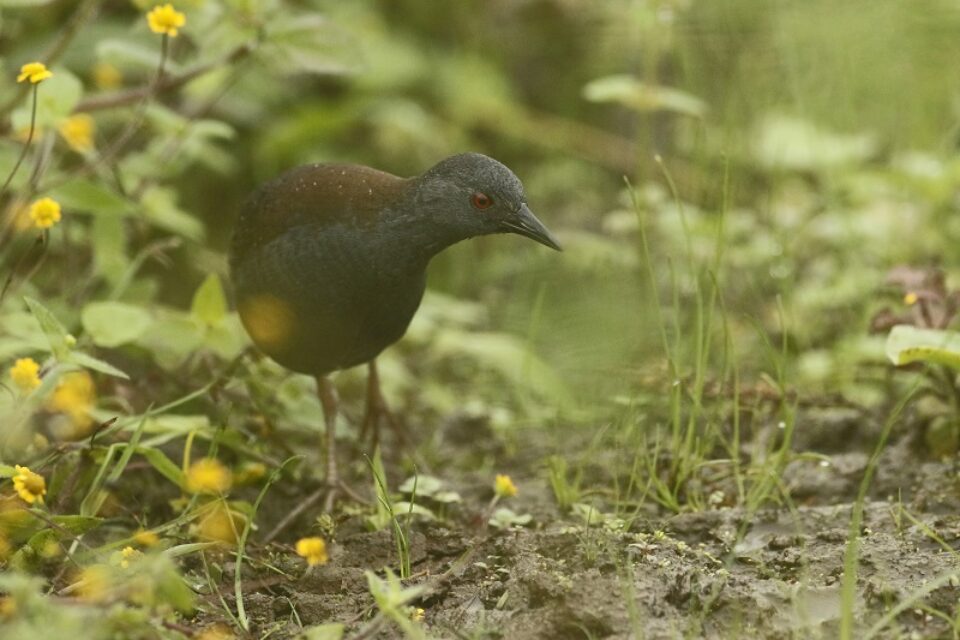
Of rails and daisies

Although the Galapagos rail is a species that is out of sight from most residents and visitors, human activity in the Islands has had an indirect impact on these birds.
Read more
3rd Jul 2017
Botany

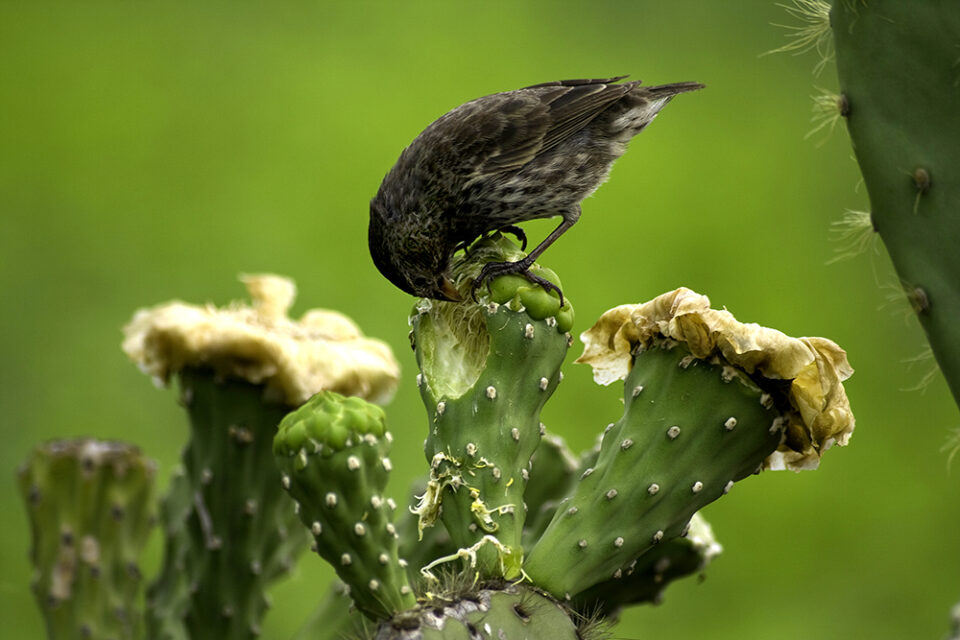
The Importance of Opuntia

Endemic to Galapagos, the Opuntia cactus is the most widely distributed and numerous plant found in the Archipelago and is a great example of adaptive radiation.
Read more
21st Mar 2016
Botany

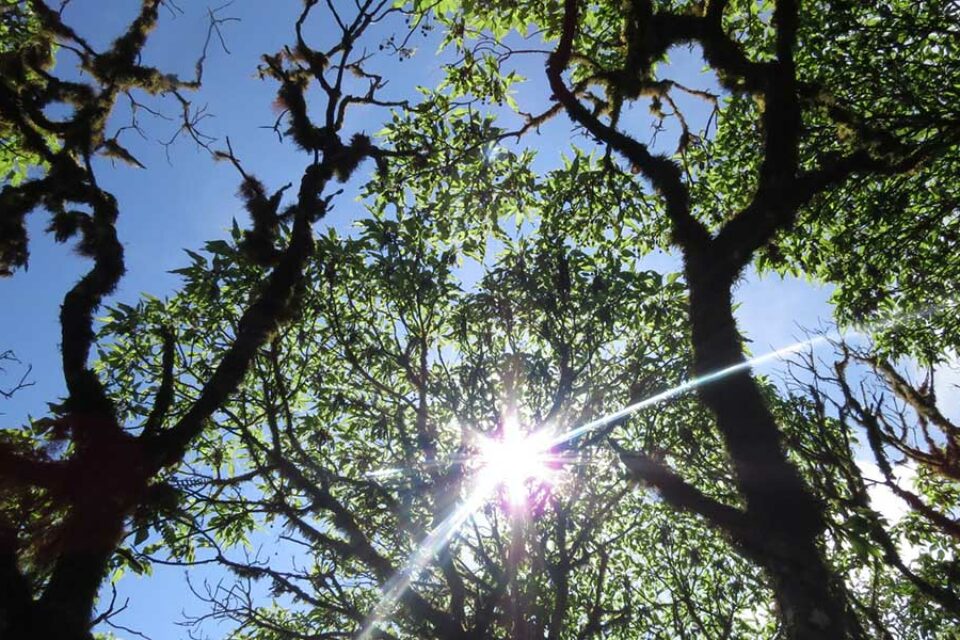
International Day of Forests 2016

To celebrate the International day of Forests, we have decided to showcase one on of the most iconic species of tree in Galapagos: scalesia.
Read more

Get the latest news from Galapagos

Join our mailing list to receive our monthly email newsletter, bringing you the latest news on Galapagos and our work to protect the Islands.

This field is hidden when viewing the form
Share This Page