Skip navigation
Go to home page > News > Our blog > Galapagos 2050: A community vision
Sombreo Chino island, Galapagos
19/11/2025 Island restoration Sustainability

Galapagos 2050: A community vision

As we celebrate 30 years of GCT, and look ahead to the next 30 years, we ask some of our friends and local partners what they want Galapagos to look like in the year 2050.

Hannah Rickets

Communications Manager (Paternity Cover)

Galapagos in 2050 © Lisa Brown

Manuel Yépez Revelo – Galapagos fisher, San Cristobal

I come from a family of generations of fishers, and I grew up watching how the sea brought life to our tables and to our culture. Today, I work in tourism, scientific research and traceable fishing, seeking a balance between the livelihoods of local communities and the conservation of the nature we so deeply value.

By 2050, I dream of a Galapagos where communities are at the forefront of managing their resources, where fishing is 100% sustainable, traceable and supported by both the knowledge of fishers and science. I want tourism to be more regenerative, involving locals throughout the value chain, without losing sight of what matters most: the landscape, the wildlife and the way of life of those of us who live here.

I also envision a generation of young people who are better prepared, more committed and more capable of finding innovative solutions to conservation challenges, while still respecting their roots. This will only be possible by strengthening alliances between communities, science, government and organisations like GCT. Because the future of Galapagos lies in the hands of those who care for it, live it and believe in it.

Manuel Yépez Revelo

Leidy Apolo Cajamarca – Community Development Coordinator, Galapagos Science Center

My ideal vision of Galapagos in the year 2050 is an Archipelago where harmony between nature and daily life is the norm. Where biodiversity is preserved and flourishes, with healthy ecosystems that attract visitors interested in ecotourism and sustainable tourism. At the same time, I want Galapagos to be a place where future generations have access to quality education, where children and young people can learn about their environment and contribute to its conservation.

Development must respect the local culture and promote the wellbeing of the community, with opportunities that do not compromise the ecosystem. To achieve this vision, we need a coordinated effort:

  • Educational programmes that foster awareness and respect for the environment and sustainability from an early age.
  • Development of ecological and sustainable infrastructure that maximises tourism potential while protecting the natural environment and preserving the visual integrity of the landscape. This includes training for local guides and business owners in sustainable practices.
  • Implementation of environmental regulations and policies that protect ecosystems and proper resource management.
  • Initiatives that integrate community voices and lead to social and environmental change by ensuring that the economic benefits of tourism and other sectors are equitably distributed.
Leidy Apolo Cajamarca
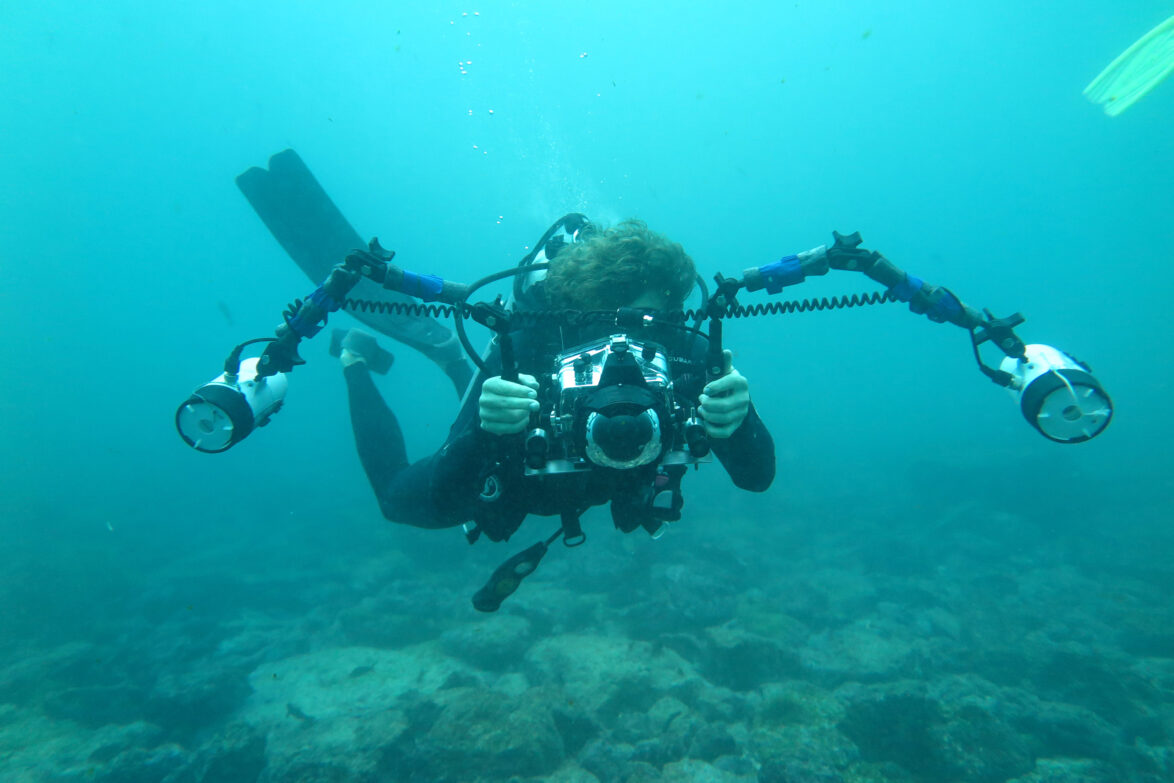
Photographing bullhead sharks

Our work in Galapagos

Learn more about the projects we support and run in Galapagos.

Learn more

Sofía Green – Marine biologist, Galapagos Whale Shark Project

In my ideal vision of Galapagos in 2050, fisheries are now truly sustainable – longlining discussions and illegal use are a thing of the past. Fishers are fairly compensated for selective catches from healthy, fast-reproducing populations, all monitored with AI and video surveillance to ensure transparency and traceability.

The far northern Galapagos region has become a fully protected marine sanctuary, along with other key areas identified for biodiversity. The High Seas pocket between Galapagos and Ecuador’s exclusive economic zone is now a protected corridor where only regulated local fishers operate.

Fish aggregating devices have been fully prohibited from being used by industrial fishers in areas where they could potentially enter the Galapagos Marine Reserve, and they are no longer causing harm to the Galapagos ecosystem.

Education in the Archipelago matches or surpasses mainland standards. Local universities offer diverse programmes tailored to island realities, empowering youth to lead conservation, innovation and community development.

Tourism has not grown in more than three decades, but instead transformed into regenerative, well-managed tourism that is limited to the Islands’ ecological carrying capacity. Visitors contribute to restoration through citizen science projects, reforestation efforts, coastal clean-ups and supporting local community and social projects.

Invasive species are well controlled at the border through strict regulation that is supported by visitors entering Galapagos, as they sign a declaration recognising that they are entering an area of special protection.

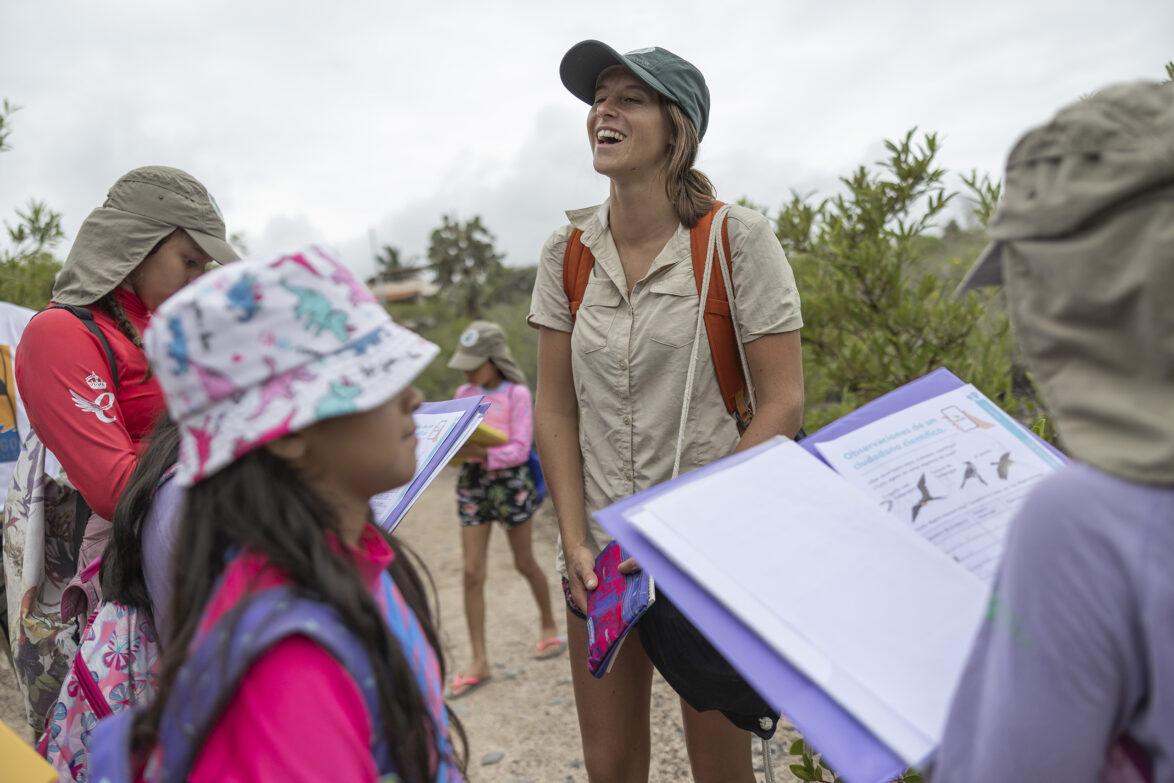
Sofía Green with the Santa Cruz branch of the Gills Club
Sofía Green

Alberto Andrade – Community leader, Frente Insular de la Reserva Marina de Galápagos

Galapagos 2050. A date that seems far off, but is closer than we think! In 2050, we will have a mature model of island resilience, a tool that we will use every day. Local and regional public policy in 2050 won’t just be a phrase, it will be the shared standard that will protect us from environmental and social threats.

We dream of stronger communities, with lasting support to them. We know that teamwork is the only way organisations, institutions and the community will be able to uphold this vision, and to protect our heritage for what it truly is: the most beautiful environmental jewel in the world!

2050 will be a year in which, together, each person brings their own strengths and skills to preserve the harmony between people and nature on the Islands. As a community, we believe that working together will ensure we remain a model for environmental protection in the eyes of the world.

To love, enjoy and protect this natural wonder we call home is not an impossible dream – it is a reality that we build, day by day, through teamwork.


Alberto Andrade
Galapagos giant tortoise eating fruit

How you can help

Ways to support our conservation work in Galapagos include becoming a member, donating to an appeal, adopting an animal, attending an event, volunteering or entering our photography competition.

Discover more

Related articles

La Loberia
10th Dec 2025
Education and outreach Sustainable development

Why are community organisations key to conservation in Galapagos?

While Galapagos’ natural ecosystem is unique and varied, so too is the Archipelago’s organisational ecosystem. Discover why organisational development is key to securing a safe future for the Islands.
Read more
5th Dec 2024
Education and outreach Sustainable development

The conservationists changing Galapagos: Three short films by Craghoppers

We spoke to the Head of Marketing at Craghoppers, Charlotte Jackson, and Director, Charlie Pinder, about their experiences creating three profound films about the Galapagos Islands.
Read more
Co-Galapagos / Galapagos Hub workshop
27th Apr 2023
Education and outreach Sustainable development

Co-Galapagos: Community-led sustainable development

During a recent visit to Galapagos, the GCT team participated in two workshops to develop the next stage of the Co-Galapagos project, which is driving community-led sustainable development initiatives on the Islands.
Read more
19th Dec 2022
Education and outreach Sustainable development

Co-Galapagos: Funding a Sustainable Future

Find out how you can help Co-Galapagos give power to local communities to build a sustainable future for the Galapagos Islands.
Read more

Get the latest news from Galapagos

Join our mailing list to receive our monthly email newsletter, bringing you the latest news on Galapagos and our work to protect the Islands.

This field is hidden when viewing the form
Share This Page