


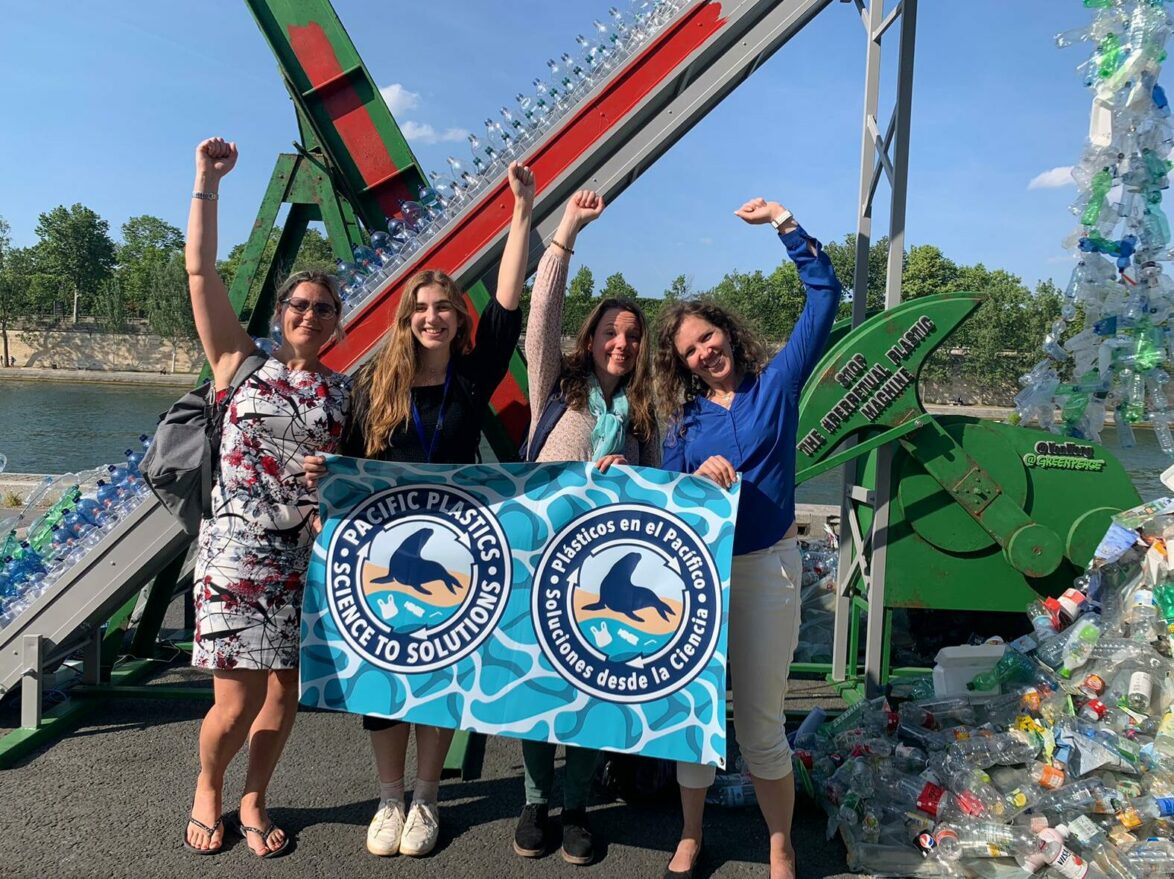


Single-use plastic legislation
We are helping draft new legislation to accelerate adoption of closed-loop systems, more emphasis on reduction and reuse, and extended producer responsibility for plastic manufacturers and importers.

Led by GCT and the University of Exeter, our network of scientists is working together with NGOs, governments, businesses and communities to free the Eastern Pacific from ocean plastic.


Our vision is a future where the oceans are free from plastic, and where biodiversity is effectively conserved by the people who live closest to it, supported by a global community.
Our mission is to protect marine biodiversity and livelihoods by reducing plastic leakage in the Eastern Pacific region.
Drawing on science and citizen participation, we are working to understand the sources, sinks and drivers of plastic pollution, and assess its impact on the natural world, while identifying and testing key intervention points. We are designing and promoting viable solutions for communities and industries, to build towards the development of a sustainable, circular plastics resource flow.
Our work is centred on the Galapagos Islands, but our network is regional in scope and draws on expertise from around the globe.

Our work to understand the sources and effect of plastic pollution, while identifying and testing solutions, is generating a growing body of published research and other useful resources. In 2024, GCT and the Galapagos National Park Directorate released a landmark new report presenting the most detailed picture to date of the threat that coastal plastic pollution poses to the Galapagos Islands. Drawing on five years of research by GCT and the PPSS network, the report highlights oceanic inputs and the impacts on wildlife and communities, and underlines the urgent need for an ambitious, legally-binding Global Plastics Treaty that bans single-use plastics, accelerates the transition to a circular economy, strengthens international laws on waste management at sea and enforces the ‘polluter pays’ principle.

15
tonnes of waste kept out of the ocean by Ichthion's Azure System

84 k
litter items collected from coast in South America by ReCiBa network

25
tonnes of waste removed from Galapagos coastlines between 2022-24

1.3 m
single-use cups kept out of the ocean by reusable cup scheme in malls
Our research is helping to inform and shape policy discussions at the local, regional and global level.


Reducing the scale of plastic leaking into the oceans requires a systematic and innovative approach capable of offer viable solutions based on understanding the cycle of plastic production, consumption and waste. Launched with the support of a grant from the UK Research and Innovation’s Global Challenges Research Fund (GCRF), our network of world-class scientists, led by Galapagos Conservation Trust and the University of Exeter in collaboration with NGOs, governmental agencies and businesses, is working to free the Eastern Pacific from marine plastics.


If you're interested in learning more about our network, discussing a collaboration or joining our mission to free the Eastern Pacific from plastic pollution, please send us a message using the form below.

We are working with partners across the Eastern Pacific to make Galapagos plastic pollution free once again, identifying the sources and impacts of plastic and supporting innovative solutions.


