


Overview
We have been working closely with the Galapagos National Park Directorate and other partners since 2017 to identify the most effective ways to tackle plastic pollution in Galapagos. The Plastic Pollution Free Galapagos programme is a multi-million-pound initiative that feeds into wider efforts to tackle pollution across the Eastern Pacific region through the Pacific Plastics: Science to Solutions network.
Lead Project Partners
Plastic pollution in numbers
80
tonnes of plastic removed from Galapagos beaches between 2018-2024
69 %
of plastics found on Galapagos coastlines are single-use items
86.3 %
of litter items found in giant tortoise faeces were made of plastic
25 %
of plastic bottles found on Galapagos coastlines originate from China
The problem
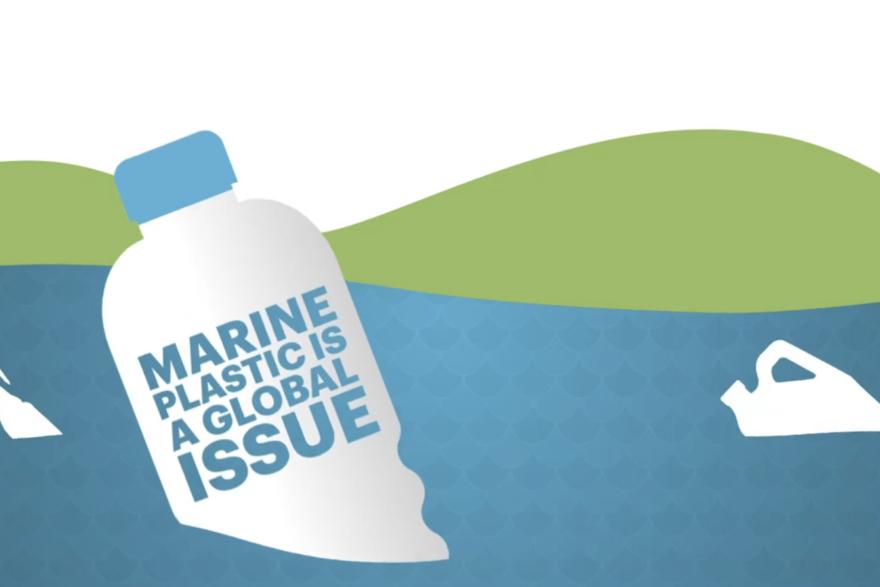
Plastic pollution is a global scourge, posing a devastating and direct threat to habitats and wildlife around the world and exacerbating other threats such as climate change and unsustainable fishing. An estimated 45% of all plastic used along the Pacific coastline of Latin America is inadequately managed, compared to around 22% globally.
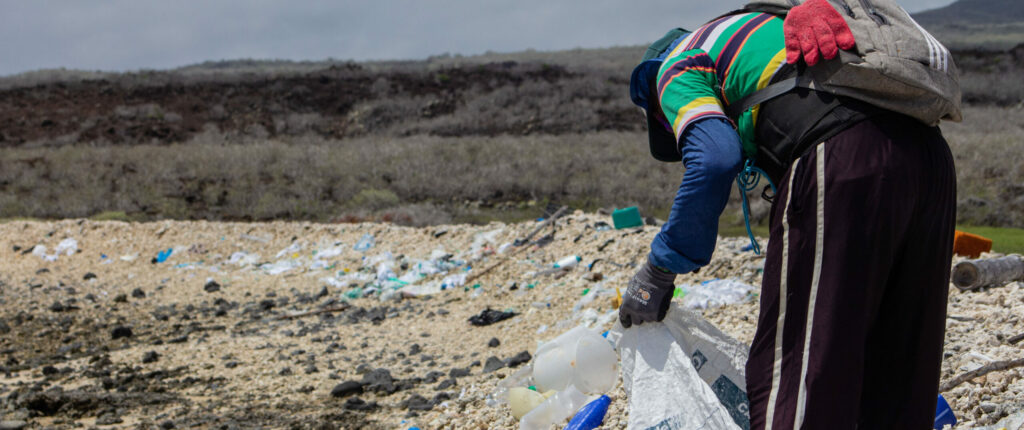
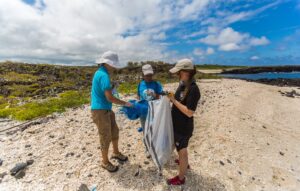
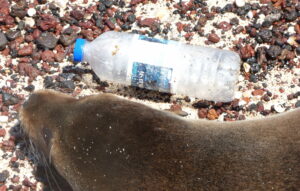
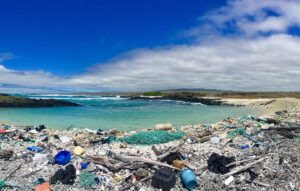
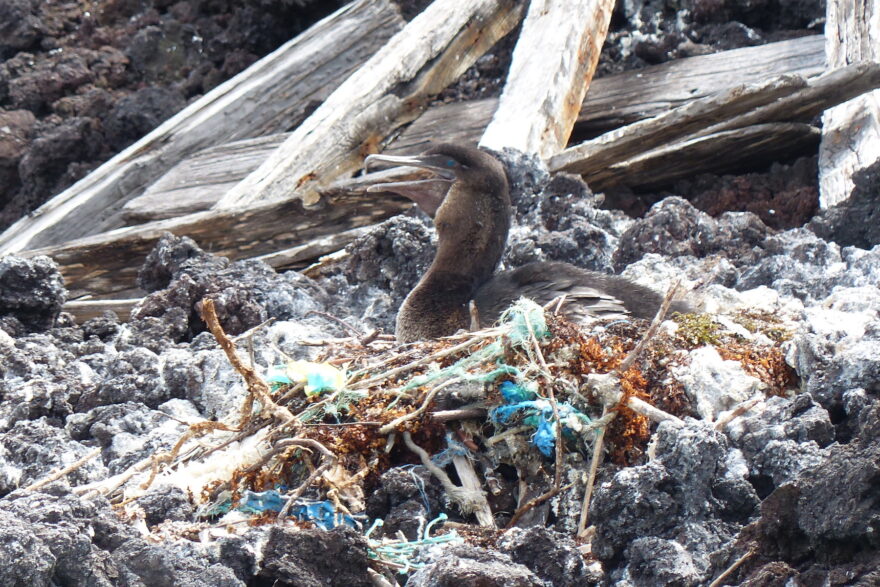
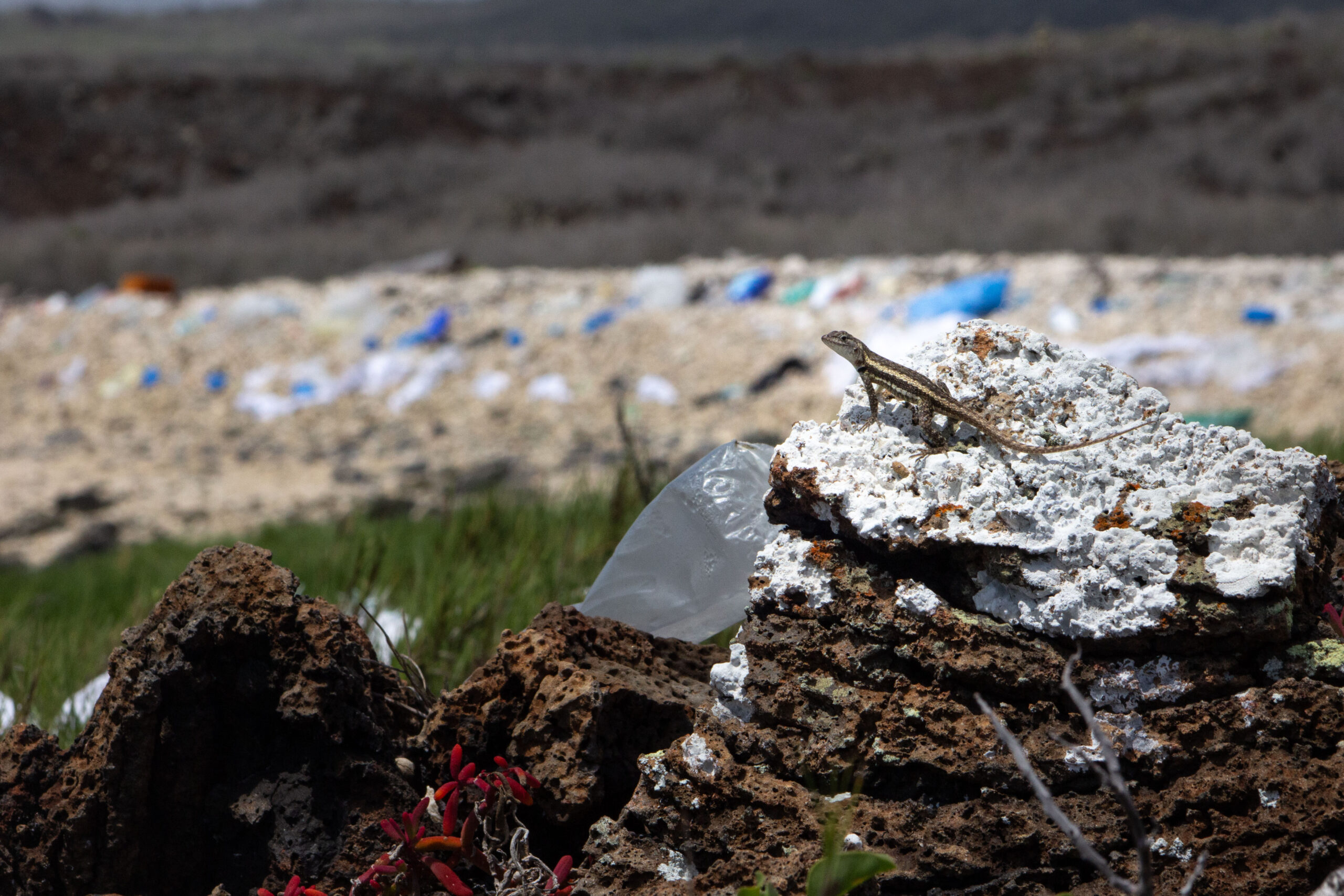
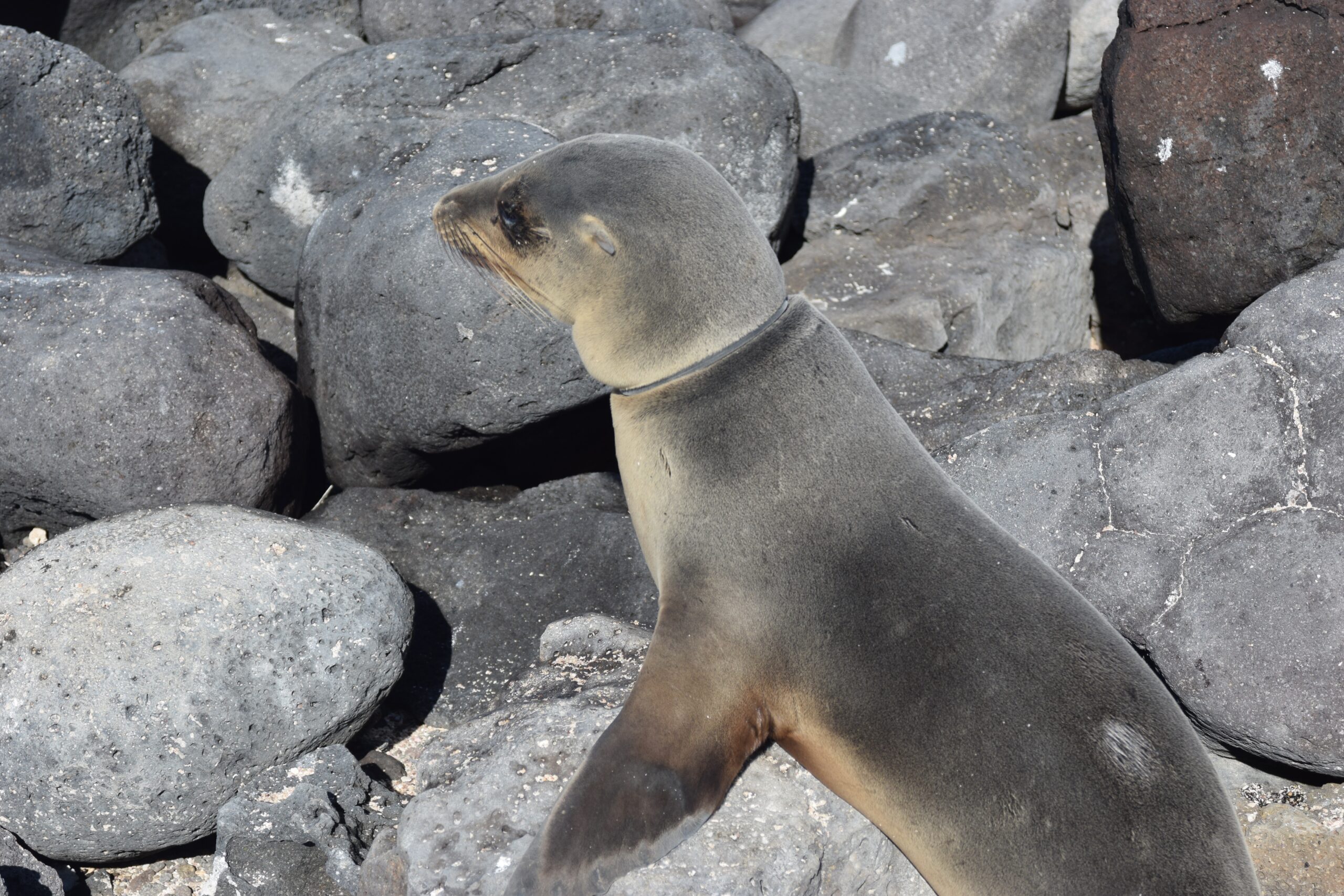
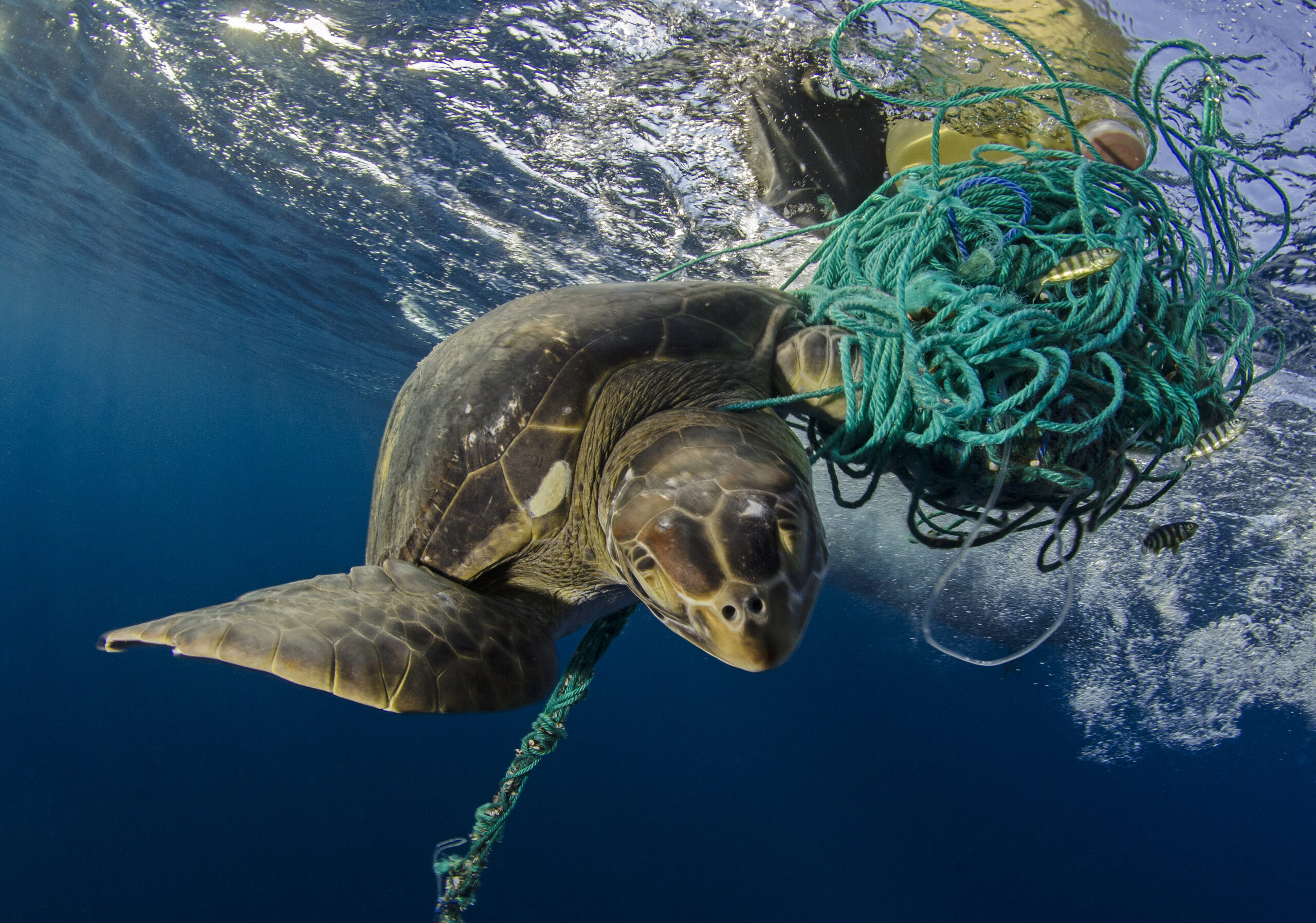
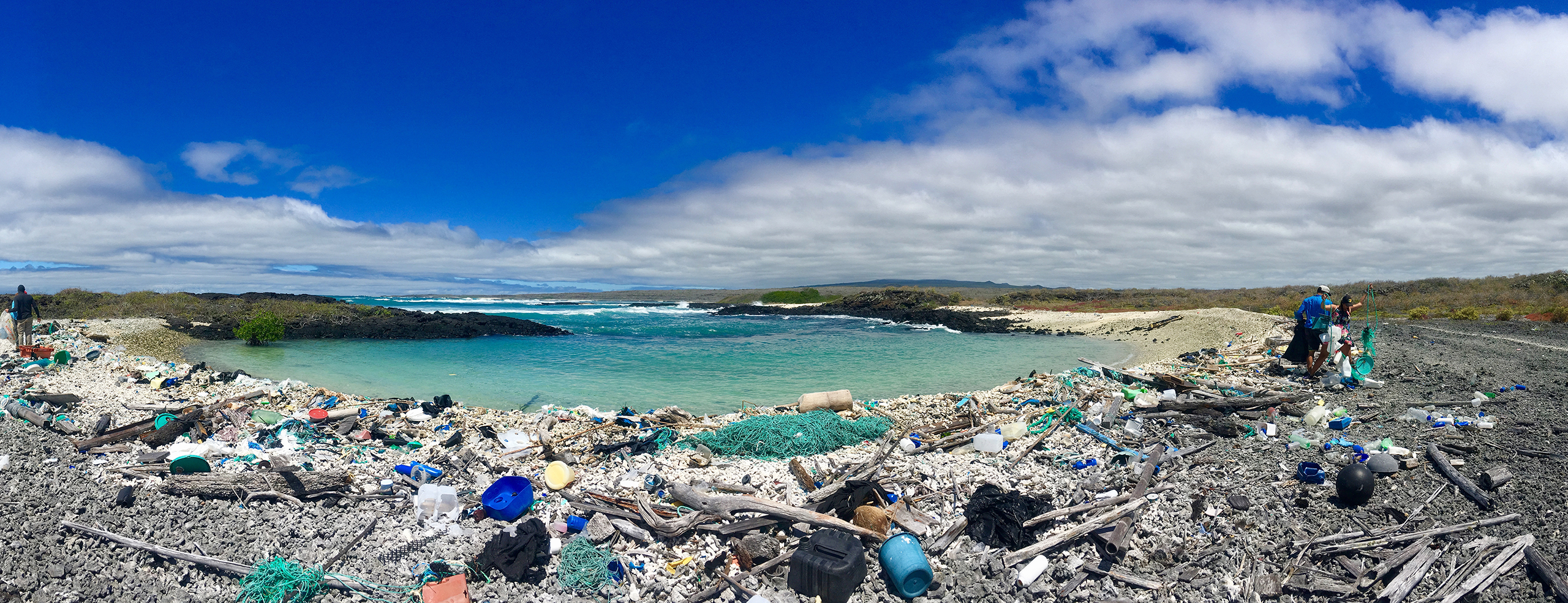
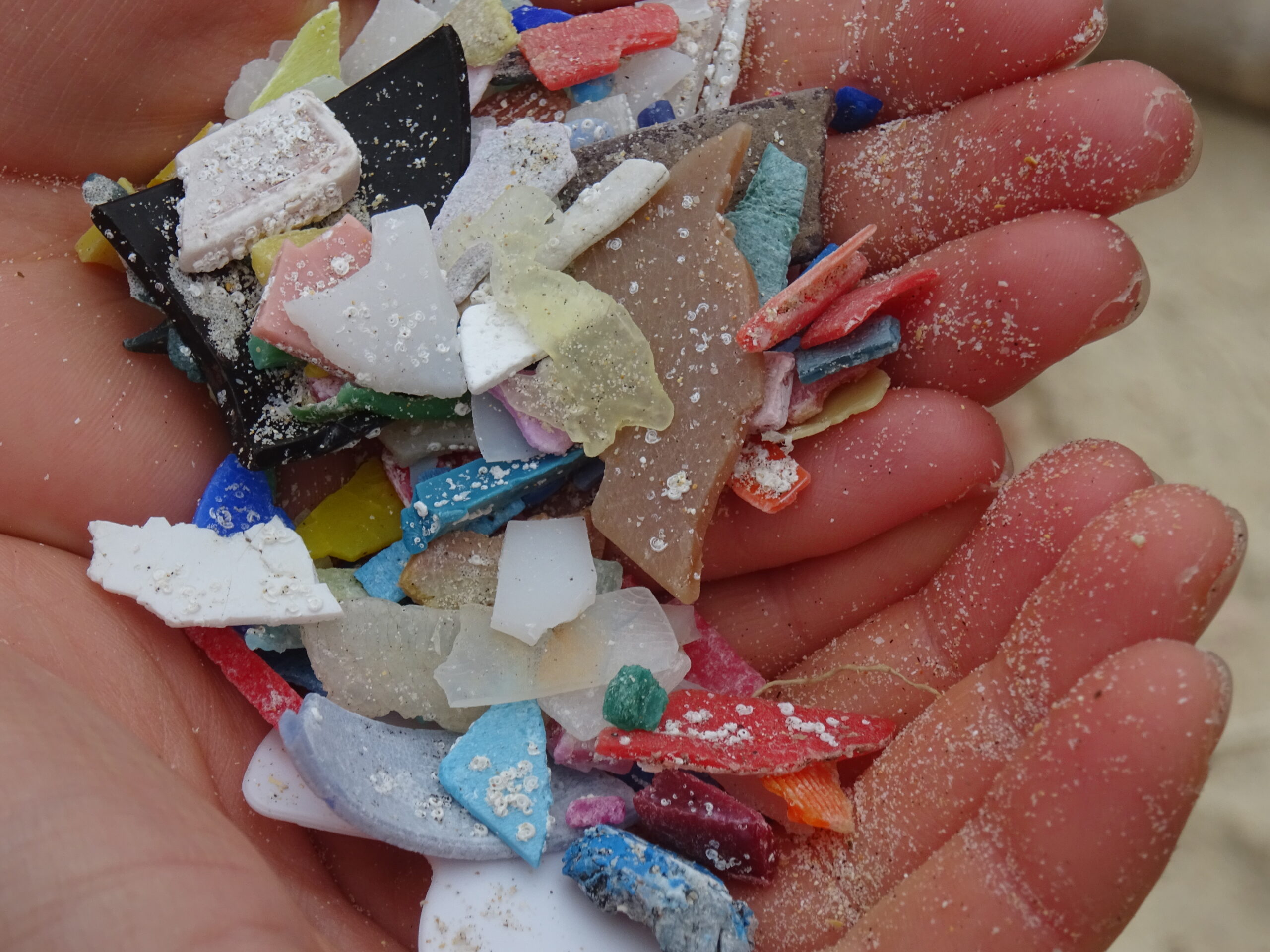
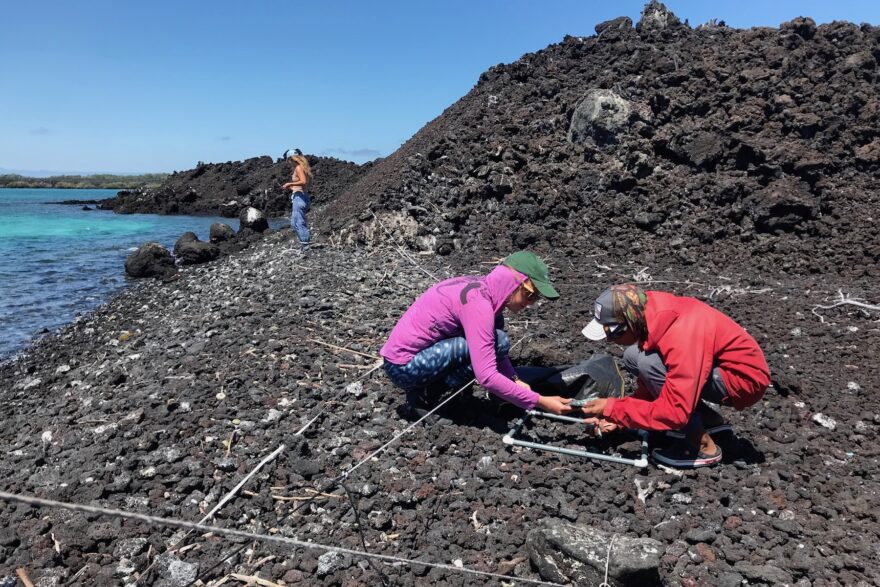
While the Galapagos Archipelago remains one of the most pristine ecosystems in the world, sadly it is not immune to the devastating effects of plastic pollution. Between 2018 and 2024, Galapagos National Park rangers removed 80 tonnes of plastic waste from the Archipelago’s beaches, and this is just the tip of the iceberg. At least 52 different species have been found to be entangled in plastic, living in affected habitats or having ingested plastic after mistaking it for food.
The problem of plastic pollution doesn’t end with the harm it inflicts on precious endemic species. Plastic is also a climate, health and social justice issue. Most plastic is made from fossil fuels, releasing pollution and climate-altering substances into the environment throughout its lifecycle. Once plastic is in the natural environment, it enters food webs, affects local livelihoods such as artisanal fishing, and accumulates in isolated habitats often far removed from the source of the problem.
Five Years of Science to Solutions
A landmark report released by Galapagos Conservation Trust and the Galapagos National Park Directorate in 2024 presents the most detailed picture to date of the threat that coastal plastic pollution poses to the Galapagos Islands.
Our findings underline the urgent need for world leaders to agree an ambitious, legally-binding Global Plastics Treaty that bans single-use plastics, accelerates the transition to a circular economy, strengthens international laws on waste management at sea and enforces the ‘polluter pays’ principle.
We hope our approach – identifying the issues and possible solutions with local involvement at every stage – can provide a 'toolkit' that could be used to tackle plastic pollution elsewhere in the world.
How we’re tackling it
This flagship GCT programme brings together an alliance of NGOs, local community groups and international scientists from the fields of oceanography, marine biology, ecotoxicology, environmental psychology and even archaeology, to combine ground-breaking scientific research with coordinated education and outreach. We have built a large and growing body of evidence on the sources and impacts of plastic pollution in Galapagos, which is being used to co-design innovative solutions with local communities.
Pacific Plastics: Science to Solutions
Led by GCT and the University of Exeter, our network of scientists is working together with NGOs, governments, businesses and communities to free the Eastern Pacific from ocean plastic.
Photo gallery
Click on an image to view larger
Project goals
The project is split into three streams, addressing the sources of plastic pollution, the impacts it has, and the solutions to address the issue.
- Sources: Where is the plastic waste coming from, how does it Galapagos, and what happens to it when it gets there?
- Impacts: Which Galapagos species are most at risk from marine plastic, how does the plastic move through the ecosystem, and how do we lower the risk that it poses?
- Solutions: What level of understanding of the issue exists in Galapagos, what are the main barriers to using plastic alternatives, how effective are policy changes, and what are the most effective forms of education and awareness campaigns?
The insights we gain from this research can then be used to address the issue at a regional scale with the communities and industries that are identified as being the primary polluters. Once we prove that these methods work in Galapagos, they can then be applied to other marine reserves and national parks around the world that are suffering from plastic pollution.
Project updates
GCT Ambasador Stephen Fry presents BBC Radio 4 Appeal
Pacific islands pay the price for the world's plastic addiction
Single-use plastics in Galapagos: A persistent problem
Let's keep pollution out of Galapagos
With your support, we can turn the tide on plastic pollution and clean up degraded habitats in Galapagos.